Clear acrylic sheet is a transparent thermoplastic made from polymethyl methacrylate (PMMA). Known for its optical clarity, low weight and versatility in fabrication, it is widely used in signage, retail displays, architectural interiors, furniture and industrial equipment.Alands Plastic manufactures and supplies
clear acrylic sheets in a range of thicknesses and sizes. Standard formats include 1220 × 2440mm (4 × 8 ft), with common thicknesses from 2mm to 25mm. Thicker sheets and custom-cut dimensions are also available for specialized projects.For wholesale buyers and manufacturers, light transmission, thickness tolerance, surface quality and machining performance are important factors in material selection. Each affects how the sheet will perform during fabrication, assembly and everyday use.
Physical Properties of Clear Acrylic Sheets
Clear PMMA offers light transmission of up to approximately 92%, a density considerably lower than glass and greater impact resistance than ordinary annealed glass.Its smooth, transparent surface makes it suitable for products requiring a clear view, precisely machined edges and an attractive finished appearance.
Technical Properties of Clear Acrylic Sheet
| Property | Typical Value or Characteristic |
|---|
| Material | PMMA (Polymethyl Methacrylate) |
| Color | Clear / Transparent |
| Light Transmission | Up to approximately 92% |
| Density | Approximately 1.19–1.20 g/cm³ |
| Weight | Around half the weight of glass at equal dimensions |
| Impact Resistance | Higher than ordinary annealed glass |
| Weather Resistance | Good resistance to outdoor weathering |
| Thermal Expansion | Approximately 0.07 mm/(m·°C) |
| Surface Protection | Protective film on both sides |
| Fabrication Methods | Laser cutting, CNC machining, drilling, polishing, thermoforming and bonding |
These figures represent typical properties of general-purpose PMMA. Performance varies with material grade, sheet thickness and testing conditions.
Weather Resistance and Dimensional Stability
PMMA has good resistance to ultraviolet exposure and outdoor weathering, making it suitable for signs, exterior decorative panels and selected architectural applications.Like other thermoplastics, acrylic expands and contracts as temperatures change. Large panels require sufficient expansion clearance around mounting points and supporting structures. Rigid installation without adequate allowance can introduce stress around holes and edges.For exterior projects, sheet thickness should be selected according to panel dimensions, support spacing, expected temperature changes and anticipated loads.Panels exposed to wind or other structural forces require application-specific engineering calculations.
Standard Sizes and Thicknesses of Clear Acrylic Sheets
Clear acrylic sheets are supplied in several standard formats to accommodate different cutting equipment, manufacturing processes and purchasing requirements.The 4 × 8 ft format is widely used in commercial plastic fabrication. Larger sheets are available for architectural features, transparent installations and oversized display components.
Common Clear Acrylic Sheet Sizes
| Sheet Size | Typical Applications |
|---|
| 1220 × 1830mm | Signage, smaller display panels |
| 1220 × 2440mm | General fabrication, signage, display structures |
| 1250 × 1850mm | Furniture components and custom fabrication |
| 2050 × 3050mm | Large transparent panels and commercial installations |
| Custom Dimensions | Project-specific cutting and fabrication |
For buyers sourcing standard commercial formats, Alands offers
4×8 clear acrylic sheets in a range of thicknesses.Common thicknesses include 2mm, 3mm, 4mm, 5mm, 6mm, 8mm, 10mm, 12mm, 15mm, 18mm, 20mm and 25mm.Thicker options, including 30mm, 40mm and 50mm sheets, are available within selected product ranges. Maximum sheet dimensions should be confirmed for each thickness.
Choosing the Right Acrylic Sheet Thickness
Sheet thickness influences stiffness, weight, fabrication requirements and the design of the supporting structure.The appropriate thickness depends on the finished product’s dimensions, mounting method and expected service conditions.
4–6mm: Display Cases and Retail Fixtures
Medium-thickness acrylic sheets are widely used for display case panels, retail fixtures, advertising structures and interior partitions.They offer a practical balance of weight, rigidity and ease of fabrication.For example, a 5mm sheet provides greater stiffness than a 2mm panel of the same dimensions while remaining suitable for routine cutting, drilling and assembly.8–12mm: Large Displays and Transparent Components
Thicker panels are suitable for larger display structures, equipment covers, custom furniture components and transparent supporting elements.Panel size and support spacing remain important considerations. A large sheet supported only at its edges may require greater thickness than a smaller panel with continuous support.15–25mm: Heavy-Duty Fabrication and Thick Acrylic Components
Thick acrylic sheets are used for substantial display elements, solid decorative components and precision-machined parts.Greater thickness increases material weight and machining time. Cutting, polishing and drilling also require closer attention to heat buildup, tool selection and residual stress.For these projects,
premium cast clear acrylic sheets are available in thicknesses extending beyond the standard commercial range.
30mm and Above: Specialized Thick Acrylic Panels
Extra-thick PMMA panels are used for selected large-scale transparent structures, solid display components and specialized installations.Swimming pool windows and aquarium panels may require substantially greater thicknesses, depending on water pressure, panel dimensions and structural support.Specialized cast acrylic panels can be produced in thicknesses of 50–200mm for certain projects. These products have different manufacturing and engineering requirements from standard commercial acrylic sheets.
For these applications, buyers can explore the
aquarium acrylic sheet range and confirm panel specifications according to the project design.
Acrylic Sheet Thickness Tolerances
Thickness tolerance is a critical purchasing consideration for CNC machining, slot fitting, precision assemblies and projects involving multiple connected panels.A sheet sold as 6mm thick may have a measurable variation from its nominal thickness. These differences can affect groove widths, connector dimensions and clearances in fabricated components.Tolerance requirements vary by manufacturing process, material grade and thickness range. Buyers should confirm the applicable tolerance before placing orders for precision applications.Imperial and metric thicknesses also need careful attention.
Imperial and Metric Thickness Conversion
| Nominal Imperial Thickness | Exact Metric Conversion |
|---|
| 1/8 inch | 3.175mm |
| 3/16 inch | 4.7625mm |
| 1/4 inch | 6.35mm |
| 3/8 inch | 9.525mm |
| 1/2 inch | 12.7mm |
| 3/4 inch | 19.05mm |
| 1 inch | 25.4mm |
The figures above are exact mathematical conversions.Commercially supplied metric sheets, such as 3mm, 6mm and 12mm, have their own nominal dimensions and manufacturing tolerances. They should not automatically be treated as identical to their closest imperial equivalents.For precision fabrication, purchase specifications should state the nominal thickness, acceptable deviation and applicable measurement standard.
Cutting and Fabrication of Clear Acrylic Sheets
Clear acrylic can be fabricated using several established processing methods, including laser cutting, CNC routing, drilling, polishing, heat bending and adhesive bonding.The choice of fabrication method affects dimensional accuracy, edge appearance, production efficiency and the quality of the finished assembly.
Laser Cutting and CNC Machining
Laser cutting is well suited to acrylic letters, signage components, decorative patterns and detailed shapes made from compatible sheet grades.With properly adjusted processing parameters, laser cutting can produce clean edges while reducing the need for additional finishing.CNC machining is suitable for components requiring accurate dimensions, holes, slots or complex edge profiles.It is particularly useful for thick sheets, larger parts and components intended for mechanical assembly.Tool geometry, cutting speed and workpiece support affect the finished surface. Excessive cutting heat can cause melting, chipping or localized stress within the material.For production runs involving tight tolerances, trial machining and dimensional inspection can help establish suitable cutting conditions.Drilling, Edge Polishing and Bonding
Acrylic sheets can be drilled, slotted and polished using tools and procedures developed for thermoplastic materials.Drilling requires suitable bit geometry and controlled feed rates. Holes positioned too close to the sheet edge may increase the risk of cracking.Transparent display products frequently require polished edges. Mechanical polishing and other suitable finishing methods can improve clarity along cut surfaces, particularly on visible corners and joints.Acrylic components can also be joined using compatible acrylic adhesives to manufacture display cases, transparent boxes and other assembled structures.Bond quality depends on surface preparation, fit, material stress and adhesive selection.Heat Bending and Thermoforming
PMMA is a thermoplastic and can be shaped through controlled heating.Line bending is commonly used for curved display panels, covers and decorative components. Thermoforming allows manufacturers to produce more complex three-dimensional shapes.Heating temperature, sheet thickness, mold design and cooling conditions all influence the finished part.Careful temperature control helps reduce surface defects, unwanted distortion and residual stresses that could affect subsequent machining or service performance.Clear Acrylic Sheet vs. Glass
Clear acrylic and glass are both used for transparent panels, but their physical and processing characteristics differ significantly.
| Property | Clear Acrylic Sheet | Ordinary Glass |
|---|
| Density | Approximately 1.2 g/cm³ | Approximately 2.5 g/cm³ |
| Light Transmission | Up to approximately 92% | Varies by glass type and thickness |
| Impact Resistance | Higher than ordinary annealed glass | More susceptible to brittle fracture |
| Scratch Resistance | More easily scratched | Higher surface hardness |
| Fabrication | Cutting, drilling, machining and thermoforming | Requires specialized processing methods |
| Thermal Expansion | Relatively high | Relatively low |
| Weight | Lightweight | Heavier at equal dimensions |
Acrylic is particularly useful in applications where optical clarity, lower weight and machining flexibility are priorities.Glass retains advantages in scratch resistance, high-temperature environments and certain architectural applications.Projects requiring safety glazing, fire-rated materials or structural load-bearing performance should use products qualified under the relevant standards.
Commercial and Industrial Applications of Clear Acrylic Sheets
Clear acrylic sheets are used across advertising, commercial displays, interior design and industrial manufacturing.Each industry has different requirements for thickness, transparency, surface quality and dimensional accuracy.
Advertising and Retail Displays
Clear acrylic is widely used in illuminated signs, display stands, branded fixtures, product showcases and retail merchandising.Laser cutting and CNC machining allow standard sheets to be made into individual components, including letters, shelves, panels and custom display shapes.Polished transparent edges can be combined with metal, wood and other decorative materials to create finished retail fixtures.For volume production, consistent sheet thickness, transparency and surface finish help manufacturers maintain a uniform appearance across multiple products.Architecture and Interior Design
Architectural and interior applications include transparent partitions, decorative panels, furniture components and selected glazing features.The material’s lower weight makes handling and installation more convenient than glass of comparable dimensions.Clear acrylic can also be cut into custom profiles to accommodate furniture designs, decorative structures and interior installations.For larger panels, structural support, thermal movement and fastening details should be considered during design.Industrial Equipment and Manufacturing
Clear acrylic sheets are used for instrument covers, equipment viewing panels, transparent housings and machined components.These applications frequently require accurate dimensions, repeatable hole positions and consistent surface quality.Components used near operating machinery may face additional requirements involving impact resistance, heat and chemical exposure.Safety-related machine guards should be designed and verified against the relevant operational hazards and applicable standards.Surface Protection and Export Packaging
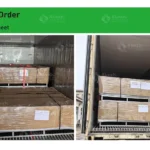
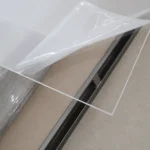
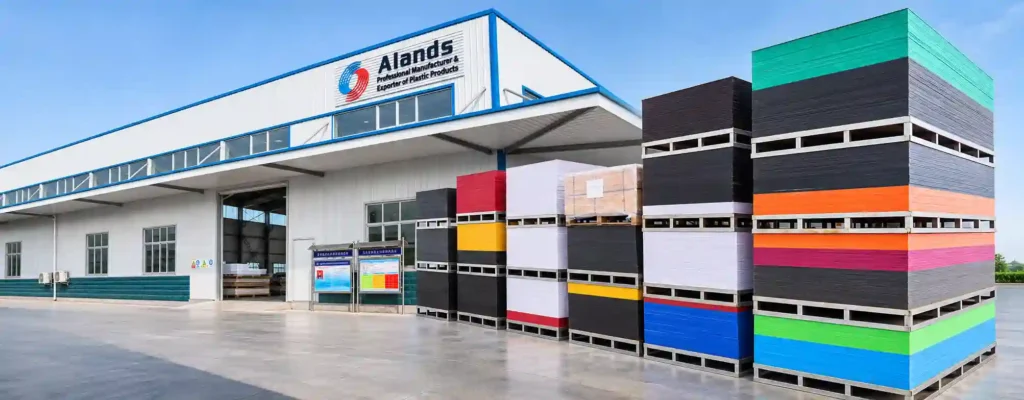
Transparent acrylic is particularly sensitive to visible surface damage during handling and transportation.Scratches caused by stacking, friction or contact with hard objects can affect the appearance of finished products.Alands clear acrylic sheets are available with protective film on both sides to help preserve the surface during storage, transportation and fabrication.
Storage and Cleaning
Acrylic sheets should be stored on suitable supports in a clean, dry environment, with protection against unnecessary heat and physical impact.Before fabrication, the material should be inspected for visible surface damage and checked against the required dimensions.For cleaning, use a soft, non-abrasive cloth and a cleaning product compatible with acrylic.Acetone, aggressive solvents and abrasive cleaners can damage PMMA surfaces and should be avoided.
Wholesale Clear Acrylic Sheets from Alands Plastic
Alands Plastic supplies clear acrylic sheets to plastic distributors, signage manufacturers, display fabricators, furniture producers and industrial material buyers.Available options include standard sheet sizes, different thicknesses, protective film and custom cutting specifications.The 1220 × 2440mm format is suitable for routine commercial purchasing, while larger formats and thick cast sheets can be supplied according to project requirements.The minimum order quantity is
1,000kg (1 metric ton), with mixed specifications available within qualifying bulk orders.
Information Required for an Acrylic Sheet Quotation
To receive an accurate quotation, buyers should provide the following details:
- Material: Clear acrylic sheet (PMMA)
- Thickness: For example, 3mm, 5mm, 10mm or 20mm
- Dimensions: Standard full sheets or custom-cut sizes
- Quantity: Number of sheets or total order weight
- Fabrication: Cutting dimensions, drilling, polishing or other processing requirements
- Destination: Delivery country and destination port
Clear purchasing specifications allow the material grade, production requirements, packing arrangements and shipping details to be reviewed before an order is confirmed.Alands supplies clear acrylic sheets and other PMMA products for wholesale distribution, commercial fabrication and international project purchasing. Buyers can
request current specifications and factory-direct quotations for standard or customized orders.