

UV-Resistant Acrylic Sheets: How Long Do They Last Outdoors?
UV-resistant acrylic sheets offer excellent outdoor weather resistance and are widely used for outdoor signage, architectural glazing, transparent protective panels, greenhouses, and decorative installations.
High-quality outdoor-grade PMMA acrylic sheets can deliver more than 10 years of outdoor service. Some premium acrylic products with proven long-term weathering performance carry warranties of up to 30 years against yellowing and loss of light transmission.
For example, PLEXIGLAS offers a 30-year guarantee against yellowing for qualifying clear acrylic products. Technical information from PERSPEX also documents excellent visible light transmission after more than 10 years of demanding outdoor exposure.
Acrylic’s outdoor durability comes primarily from the inherent UV stability of polymethyl methacrylate (PMMA). For applications requiring additional UV protection, manufacturers can incorporate UV absorbers and light stabilizers into the formulation.
For importers, project contractors, and sheet distributors, understanding acrylic formulations, weathering performance, and testing requirements is essential when selecting materials for long-term outdoor use.
How Long Do UV-Resistant Acrylic Sheets Last Outdoors?
Acrylic sheets are manufactured primarily from polymethyl methacrylate (PMMA), a transparent thermoplastic known for its excellent natural weather resistance.
High-quality PMMA maintains good optical clarity and appearance during prolonged outdoor exposure.
For purchasing purposes, outdoor acrylic projects can be evaluated according to their intended service life.
| Target Service Life | Material Requirements | Typical Applications |
|---|---|---|
| 3–5 years | Outdoor-grade PMMA with verified basic weathering performance | Outdoor signs, promotional displays |
| 5–10 years | Quality PMMA with defined light transmission and color requirements | Outdoor light boxes, decorative panels |
| 10–20 years | Materials supported by long-term weathering data | Permanent transparent barriers, architectural features |
| 20–30 years | Specific products with documented long-term performance and applicable warranties | Architectural glazing and long-life transparent installations |
These service-life ranges are project planning references, not universal product warranties. Actual service life depends on the selected acrylic grade, installation conditions, and maintenance.
5–10 Years: Outdoor Signs and Display Applications
Outdoor advertising signs, light boxes, and decorative panels generally have defined replacement cycles.
Key purchasing considerations include optical clarity, color stability, surface quality, and fabrication performance.
Selecting high-quality PMMA and using appropriate mounting systems helps maintain the appearance of outdoor displays and reduces premature replacement.
10–20 Years: Permanent Outdoor Installations
Transparent barriers, architectural decorative panels, and glazing applications require consistent material quality and reliable long-term weathering performance.
Buyers should specify:
- Initial visible light transmission
- Light transmission retention after weathering
- Yellowness index
- Sheet thickness and dimensional requirements
- Mounting and structural requirements
For permanent installations, long-term material performance and maintenance costs carry greater importance than the initial sheet price.
30 Years: Premium Acrylic Products with Long-Term Warranties
PLEXIGLAS provides a 30-year guarantee covering yellowing and light transmission for qualifying clear acrylic products.
This guarantee is supported by the manufacturer’s material research, outdoor exposure experience, and quality control.
A 30-year anti-yellowing guarantee applies to specific optical performance requirements. It does not represent a universal 30-year warranty for all acrylic sheets, mechanical properties, or installation systems.
Project buyers should review the exact product specifications and warranty conditions before selecting materials for long-life applications.
How Are UV-Resistant Acrylic Sheets Manufactured?
UV-resistant acrylic sheets are based on PMMA.
High-quality PMMA already offers good natural resistance to UV-induced degradation. Manufacturers improve long-term product consistency through raw material selection, polymerization control, and formulation design.
For applications requiring enhanced UV protection or specific UV-filtering properties, three main classes of additives are used in suitable polymer formulations.
1. Benzotriazole UV Absorbers
Benzotriazole UV absorbers are widely used in transparent polymer applications.
Commercial examples include:
- BASF Tinuvin 360
- BASF Tinuvin 234
These additives absorb ultraviolet radiation within specific wavelength ranges and dissipate the absorbed energy through non-radiative processes.
This reduces the amount of UV energy available to initiate photochemical degradation within the polymer.
Tinuvin 360 is a low-volatility benzotriazole UV absorber designed for use in various polymer systems, including suitable acrylic resin applications.
In transparent acrylic formulations, benzotriazole UV absorbers help control UV transmission and protect the material against UV-related degradation.
2. Triazine UV Absorbers
Hydroxyphenyl triazine (HPT) UV absorbers are another class of additives used in high-performance weather-resistant polymers.
Commercial examples include:
- BASF Tinuvin 1577
- BASF Tinuvin 1600
These additives provide UV absorption, while certain grades offer high thermal stability and low volatility for demanding processing conditions.
Tinuvin 1600 has been used in technical solutions for transparent outdoor polymer films, including PMMA-related applications.
Manufacturers select UV absorbers according to the required UV protection range, sheet thickness, optical clarity, and production conditions.
3. Hindered Amine Light Stabilizers (HALS)
Hindered amine light stabilizers, commonly known as HALS, help suppress photo-oxidative degradation in polymers.
During outdoor exposure, UV radiation and oxygen can initiate free-radical reactions that contribute to changes in polymer properties.
HALS act through radical-scavenging and stabilization cycles to slow these degradation processes.
Their function differs from that of UV absorbers.
| Additive Type | Mechanism | Primary Function |
|---|---|---|
| Benzotriazole UV absorbers | Absorb UV radiation within selected wavelengths | Reduce UV transmission and photodegradation |
| Triazine UV absorbers | Absorb UV radiation and dissipate energy | Provide UV protection for specified wavelength ranges |
| HALS | Interrupt free-radical oxidation reactions | Reduce photo-oxidative degradation |
In properly formulated polymer systems, UV absorbers and HALS can work together to improve long-term weathering stability.
HALS are not essential components of every PMMA formulation. Stabilizer selection must match the polymer chemistry, manufacturing process, and target performance.
The commercial additives listed above are examples of established industry technologies. They do not indicate that Alands currently uses these specific additive grades.
4. How Are UV Stabilizers Added to Acrylic Sheets?
Cast Acrylic Sheets
Cast acrylic sheets are produced through the polymerization of methyl methacrylate (MMA) monomer or partially polymerized MMA mixtures.
When an internally stabilized formulation is required, compatible UV absorbers can be incorporated during the raw material preparation stage.
The mixture then undergoes casting, polymerization, and post-processing to form the finished sheet.
Manufacturers must control additive solubility, dispersion uniformity, and compatibility with the polymerization process.
Extruded Acrylic Sheets
Extruded acrylic sheets are manufactured by melting and processing PMMA resin pellets.
UV stabilizers can be introduced through premixing, masterbatches, or other suitable compounding methods before extrusion.
The material is then melted, extruded, cooled, and formed into sheets.
Additives must provide adequate thermal stability at processing temperatures while meeting optical clarity and dispersion requirements.
Both manufacturing methods can produce PMMA sheets with specified weathering performance.
Incorporating UV absorbers throughout the material creates an internal UV-absorbing system rather than relying entirely on a surface coating.
5. Do UV Additives Affect Acrylic Transparency?
UV absorbers are selected to control ultraviolet light transmission while preserving the required visible light transmission.
The final optical properties depend on the additive chemistry, concentration, sheet thickness, and dispersion quality.
For high-transparency acrylic sheets, manufacturers must evaluate:
- Visible light transmission
- UV transmission spectrum
- Sheet color and yellowness index
- Additive dispersion uniformity
- Long-term weathering stability
The objective of a UV-stabilized acrylic formulation is to maintain the required optical clarity while delivering controlled UV protection and long-term material stability.
UV Resistance vs. UV Filtering: What Is the Difference?
UV resistance and UV filtering describe two different material properties.
Understanding the distinction is important when purchasing acrylic sheets for outdoor glazing, display cases, and protective applications.
UV Resistance: Protection Against Material Degradation
UV resistance describes an acrylic sheet’s ability to maintain its properties under ultraviolet radiation and other environmental conditions.
Key evaluation criteria include:
- Changes in yellowness index
- Light transmission retention
- Surface condition
- Retention of mechanical properties
This determines how well an acrylic sheet maintains its appearance and performance during outdoor exposure.
UV Filtering: Blocking UV Transmission
UV filtering describes the ability of an acrylic sheet to absorb or block ultraviolet radiation within a specified wavelength range.
For example, ACRYLITE Gallery UV Filtering OP3 products filter approximately 98% of incident ultraviolet radiation under the manufacturer’s stated test conditions.
Such materials are used for museum displays, artwork protection, and applications where UV transmission must be controlled.
| Acrylic Type | Main Property | Typical Applications |
|---|---|---|
| Standard high-quality PMMA | Natural outdoor weather resistance | Outdoor signage, transparent decoration |
| Weathering-enhanced PMMA | Improved long-term stability through suitable formulation | Permanent outdoor installations |
| UV-filtering PMMA | Controlled UV transmission | Museums, artwork protection, specialty glazing |
Outdoor weather resistance and UV-blocking performance must be evaluated separately.
For architectural glazing, buyers should specify both the durability of the acrylic sheet and any required ultraviolet transmission limits.
Do UV-Resistant Acrylic Sheets Turn Yellow in Sunlight?
High-quality PMMA offers excellent resistance to yellowing and is among the more weather-resistant transparent plastics used in outdoor applications.
Long-term yellowing performance depends on raw material quality, manufacturing consistency, stabilizer formulation, and environmental exposure.
Raw Material Quality
Raw material purity, impurities, and production conditions affect the initial optical properties of transparent acrylic sheets.
For clear cast acrylic, high-quality MMA raw materials and controlled polymerization help maintain optical clarity, color consistency, and low defect levels.
Alands supplies clear acrylic plexiglass sheets manufactured from virgin PMMA for applications requiring high transparency, consistent surface quality, and reliable fabrication performance.
Buyers should evaluate initial light transmission, sheet color, and consistency between production batches.
UV Exposure and Temperature
Long-term solar radiation places continuous weathering demands on outdoor polymer materials.
High temperatures also increase thermal aging loads and affect sheet dimensions and installation stresses.
For high-sunlight markets such as the Middle East and Southeast Asia, buyers should review weathering data and expected operating temperatures when selecting outdoor acrylic.
Evaluating Optical Performance
The yellowness index measures changes in material color.
Visible light transmission measures the amount of visible light passing through transparent acrylic.
For long-term outdoor applications, both initial performance and changes after weathering should be included in material evaluation.
Cast vs. Extruded Acrylic: Which Is Better for Outdoor Use?
Cast acrylic and extruded acrylic are both manufactured from PMMA.
High-quality outdoor grades produced by either method provide excellent weather resistance.
Their primary differences involve manufacturing processes, dimensional tolerances, internal stresses, and fabrication characteristics.
| Property | Cast Acrylic | Extruded Acrylic |
|---|---|---|
| Manufacturing method | Casting and polymerization | Continuous melt extrusion |
| Optical clarity | High | High |
| Outdoor weather resistance | Excellent | Excellent |
| Thickness tolerance | Generally wider | Generally tighter |
| Internal stress | Generally lower | Processing stresses require attention |
| CNC machining | Suitable | Suitable |
| Thermoforming | Suitable | Suitable |
| Common purchasing applications | Custom fabrication, thick sheets, decorative panels | Standard sizes, high-volume fabrication |
Cast Acrylic for Outdoor Applications
Cast acrylic offers excellent optical properties and versatility in cutting, drilling, engraving, and custom fabrication.
Common outdoor applications include signage, architectural decorative panels, large transparent sheets, and custom components.
For long-term outdoor projects, select cast acrylic grades with documented weathering performance.
Extruded Acrylic for Outdoor Applications
Extruded acrylic is well suited to standardized dimensions and continuous production applications.
Its dimensional consistency supports efficient processing and fabrication.
Typical uses include outdoor light boxes, advertising panels, and selected thermoformed products.
The manufacturing method alone does not determine UV resistance or outdoor service life. Material grade, stabilizer formulation, and weathering test results provide a more reliable basis for comparison.
What Affects the Outdoor Lifespan of Acrylic Sheets?
1. Sunlight Intensity and Climate
Solar UV radiation, temperature, humidity, and rainfall all influence the performance of materials used outdoors.
Exposure conditions vary significantly between geographic regions.
For installations exposed to intense sunlight, specify acrylic grades with weathering performance appropriate for local climate conditions.
2. Thermal Expansion and Installation Clearance
Acrylic expands and contracts more than glass and steel in response to temperature changes.
For example, using a typical linear thermal expansion coefficient of 0.07 mm/(m·°C) for PLEXIGLAS GS and XT:
A 2-meter-long acrylic sheet exposed to a 40°C temperature change has a theoretical length change of:
2 × 40 × 0.07 = 5.6mm
This means the sheet can expand or contract by approximately 5.6mm over that temperature range.
Large outdoor acrylic panels require appropriate expansion clearance around mounting frames and fastening points.
This calculation uses a typical coefficient for the specified PMMA products. Actual installation design should follow the selected material’s technical documentation and project requirements.
3. Sheet Thickness and Support Span
Outdoor acrylic panels must support their own weight and withstand wind loads and other installation stresses.
Sheet thickness, panel dimensions, fastening methods, and support spacing determine structural performance.
For large transparent panels, thickness and mounting systems should be selected through appropriate structural design.
4. Surface Cleaning and Maintenance
Outdoor acrylic surfaces accumulate dust, sand, and other contaminants.
Cleaning with water, a soft cloth, and an acrylic-compatible cleaning solution helps maintain surface appearance.
Avoid abrasive cleaning tools and incompatible solvents.
What Acrylic Sheet Thickness Is Best for Outdoor Use?
Different outdoor applications require different combinations of sheet thickness, rigidity, panel dimensions, and structural support.
| Outdoor Application | Initial Thickness Reference | Key Purchasing Considerations |
|---|---|---|
| Small outdoor signs | 3–5mm | Color stability, fabrication quality |
| Outdoor light box panels | 3–5mm | Light transmission, light diffusion |
| Transparent decorative panels | 5–8mm | Flatness, weather resistance |
| Outdoor transparent barriers | 6–10mm | Mounting structure, support span |
| Architectural transparent panels | Determined by engineering design | Wind load, support system |
| Large custom transparent sheets | Determined by project requirements | Thickness, dimensions, structural calculations |
These thickness ranges are preliminary purchasing references and do not replace wind-load calculations or structural engineering requirements.
Standard 4×8 Acrylic Sheets for Outdoor Projects
For signage, displays, and transparent decorative panels, 4×8 clear acrylic sheets offer a convenient standard size of approximately 1220 × 2440mm.
These sheets are suitable for cutting, drilling, CNC machining, and other fabrication processes. Buyers can select the appropriate thickness according to panel dimensions and mounting requirements.
6mm Acrylic Sheets for Protective Panels
For selected transparent barriers, protective screens, and architectural decorative applications, 6mm Perspex sheets provide a practical combination of transparency, rigidity, and fabrication versatility.
For outdoor installations, the final sheet thickness should be confirmed according to panel size, support spacing, wind loads, and fixing methods.
For outdoor architectural projects, provide suppliers with the full sheet dimensions, installation location, support configuration, and intended service life.
How to Test UV Resistance in Acrylic Sheets
For long-term outdoor projects, documented weathering test results provide a stronger basis for material selection than a general “UV Resistant” label.
1. Visible Light Transmission
High-quality clear PMMA sheets typically offer visible light transmission of approximately 92%.
This is an important measure of initial optical performance.
Long-term weathering evaluation should also measure changes in light transmission after exposure.
2. Yellowness Index
The yellowness index measures color changes in transparent materials.
Buyers should confirm the test method, sample thickness, weathering conditions, and results before and after exposure.
3. Accelerated Weathering Tests
ISO 4892-2 specifies laboratory exposure methods using xenon-arc light sources to evaluate the effects of simulated solar radiation and other controlled environmental conditions on plastics.
Accelerated weathering tests can be used to evaluate:
- Changes in yellowness index
- Changes in light transmission
- Surface appearance
- Retention of mechanical properties
Test reports should document the exposure conditions, irradiance, temperature, humidity, and test duration.
A 1,000-hour accelerated weathering test does not automatically represent 10 years of outdoor service.
Estimating actual service life requires supporting data for the material, test conditions, and natural outdoor exposure.
4. UV Transmission Spectrum
For applications requiring UV protection, the transmission of ultraviolet radiation at specific wavelengths must be measured.
Buyers can request UV transmission curves showing the material’s filtering performance across the required wavelength range.
5. Long-Term Outdoor Exposure Data
Natural weathering studies document how acrylic performs under real climatic conditions.
For projects with service-life targets exceeding 10 years, historical outdoor exposure records, technical documentation, and applicable warranties provide valuable supporting evidence.
Key Specifications for Bulk UV-Resistant Acrylic Sheet Purchasing
Importers, sheet distributors, and project buyers should establish clear requirements for material grade, optical performance, and outdoor durability.
| Purchasing Parameter | Recommended Specification |
|---|---|
| Material | PMMA |
| Manufacturing process | Cast / Extruded |
| Product type | Standard outdoor-grade, weathering-enhanced, or UV-filtering |
| Sheet dimensions | Length, width, thickness |
| Initial light transmission | Verified product test values |
| UV-filtering performance | Transmission within specified wavelength ranges |
| Yellowing performance | Yellowness index before and after weathering |
| Weathering tests | Test method, exposure conditions, results |
| Installation environment | Outdoor location, temperature range, support system |
| Order requirements | Quantity, protective film, packaging, delivery terms |
How to Compare UV Resistance Between Suppliers
Supplier comparisons should use consistent technical requirements and testing methods.
Buyers should verify:
- Whether the supplied material meets the required PMMA grade.
- Whether the product has relevant weathering performance data.
- Whether test reports identify the same product grade and thickness as the order.
- Whether light transmission and yellowness index meet project specifications.
- Whether the supplier provides clearly defined batch acceptance criteria.
For projects requiring long-term performance guarantees, the applicable warranty conditions and technical requirements should be included in the purchasing agreement.
Purchase Price vs. Long-Term Performance
The total cost of an outdoor acrylic installation includes sheet materials, installation, maintenance, and eventual replacement.
For permanent installations, selecting acrylic that meets the required weathering specifications helps control maintenance and replacement costs associated with yellowing, cracking, and installation damage.
A reliable comparison between outdoor acrylic sheet suppliers begins with consistent material grades, thicknesses, performance requirements, and acceptance standards.
Frequently Asked Questions About UV-Resistant Acrylic Sheets
1. Can UV-resistant acrylic sheets last more than 10 years outdoors?
Yes. High-quality outdoor-grade PMMA provides long-term weather resistance. Certain premium clear acrylic products with documented performance carry guarantees of up to 30 years against yellowing.
Material selection should follow the specific product’s technical documentation and the project’s operating requirements.
2. Does standard clear acrylic have natural UV resistance?
Yes. High-quality PMMA has inherent resistance to UV-induced degradation and is widely used outdoors.
Specialized UV-stabilized formulations can further modify UV absorption and long-term weathering performance.
3. What additives are used to improve UV resistance in acrylic sheets?
Common formulation technologies include benzotriazole UV absorbers, hydroxyphenyl triazine UV absorbers, and suitable hindered amine light stabilizers (HALS).
Additive selection depends on PMMA processing conditions, optical clarity requirements, target UV protection wavelengths, and weathering specifications.
The final formulation must be verified through appropriate testing.
4. Do UV-resistant acrylic sheets block ultraviolet radiation?
UV resistance and UV filtering describe different material properties.
Specialized UV-filtering PMMA sheets reduce ultraviolet transmission within specified wavelength ranges and are used for artwork protection, museum displays, and specialty glazing.
5. Is cast acrylic more UV-resistant than extruded acrylic?
High-quality outdoor-grade PMMA sheets manufactured by either process offer excellent weather resistance.
Long-term durability should be evaluated using the material grade, formulation, weathering test results, and expected exposure conditions.
6. How can buyers verify the quality of UV-resistant acrylic sheets?
Verify the PMMA grade, initial visible light transmission, yellowness index, weathering test results, and applicable acceptance requirements.
For UV-filtering products, also request UV transmission data covering the specified wavelength range.
Buy Outdoor Acrylic Sheets in Bulk from Alands
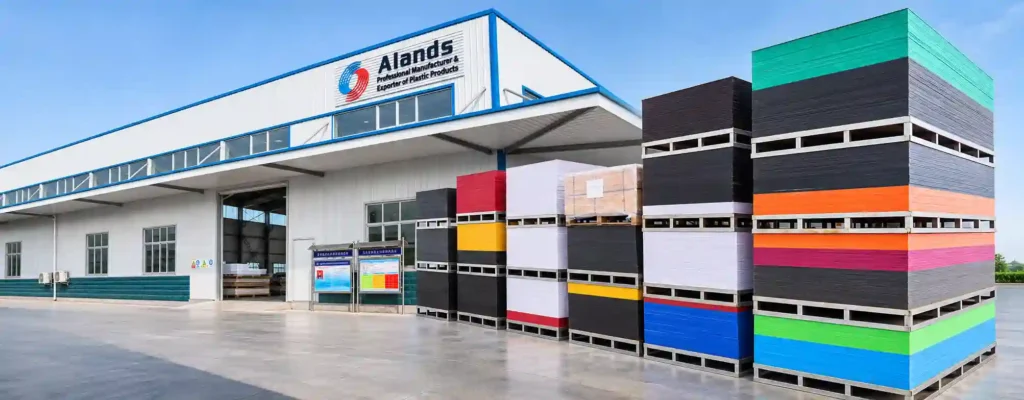
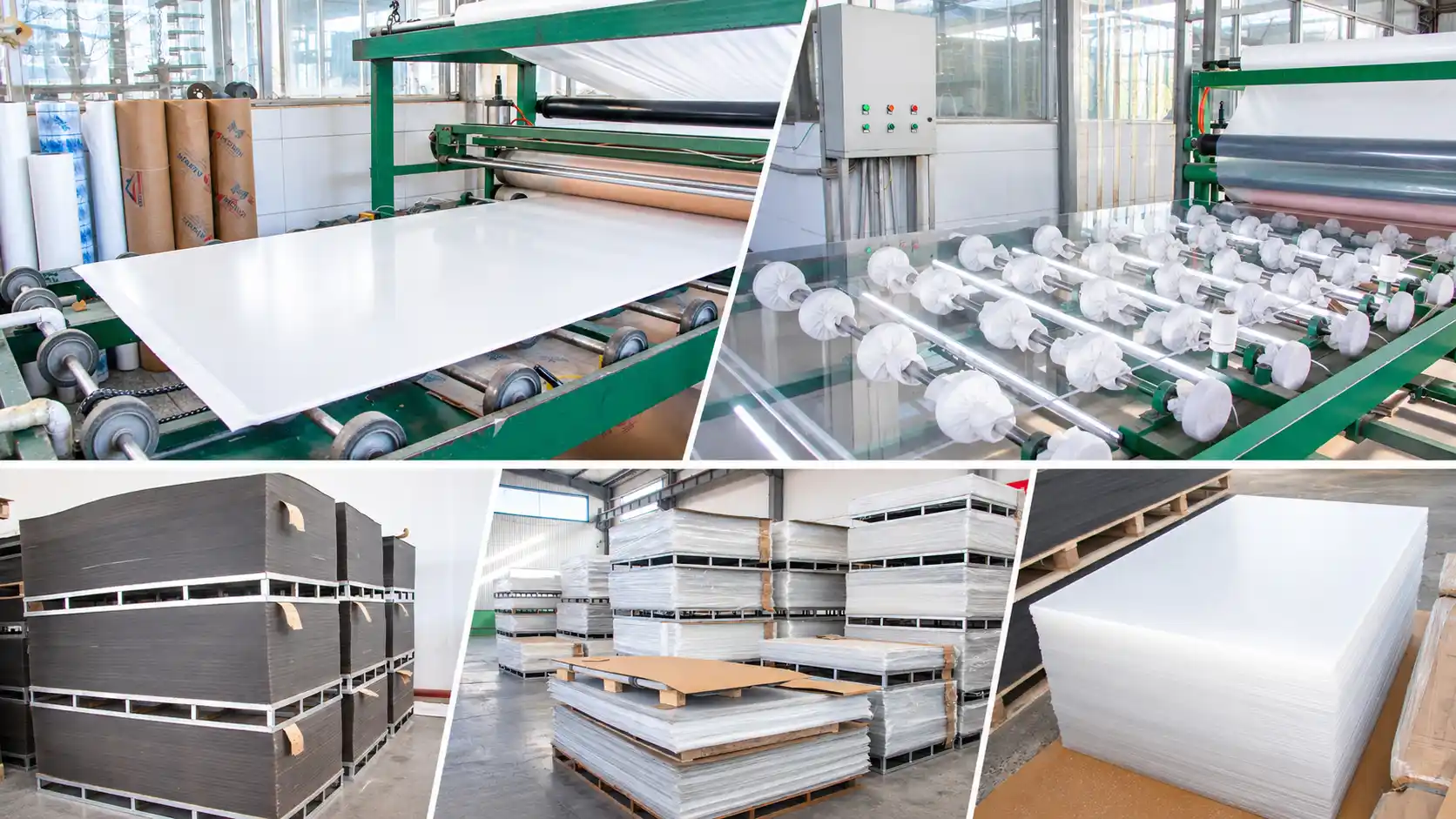
Alands manufactures and supplies clear cast acrylic sheets and colored PMMA sheets for outdoor signage, transparent decorative panels, display installations, and custom fabrication.
Common sheet sizes include 1220 × 2440mm, 1250 × 2450mm, and 2050 × 3050mm, with multiple standard thicknesses and custom specifications available.
For outdoor applications, Alands assists buyers in selecting suitable sheet dimensions, thicknesses, colors, and fabrication specifications according to project requirements and order quantities.
For orders requiring specific UV-filtering performance, weathering test results, or long-term performance criteria, the material formulation, technical standards, and acceptance requirements should be confirmed before production.
Contact Alands with your application, target service life, sheet dimensions, and estimated order quantity to discuss outdoor acrylic sheet specifications and request a bulk quotation.