


What Is PMMA? Properties, Uses, Manufacturing and Acrylic Sheet Guide
PMMA is one of the most widely used transparent plastics in manufacturing, construction, signage, displays, lighting, furniture, and industrial fabrication.
It is commonly known as acrylic, acrylic glass, or plexiglass, although PLEXIGLAS® is technically a registered brand name rather than the generic name of the material.
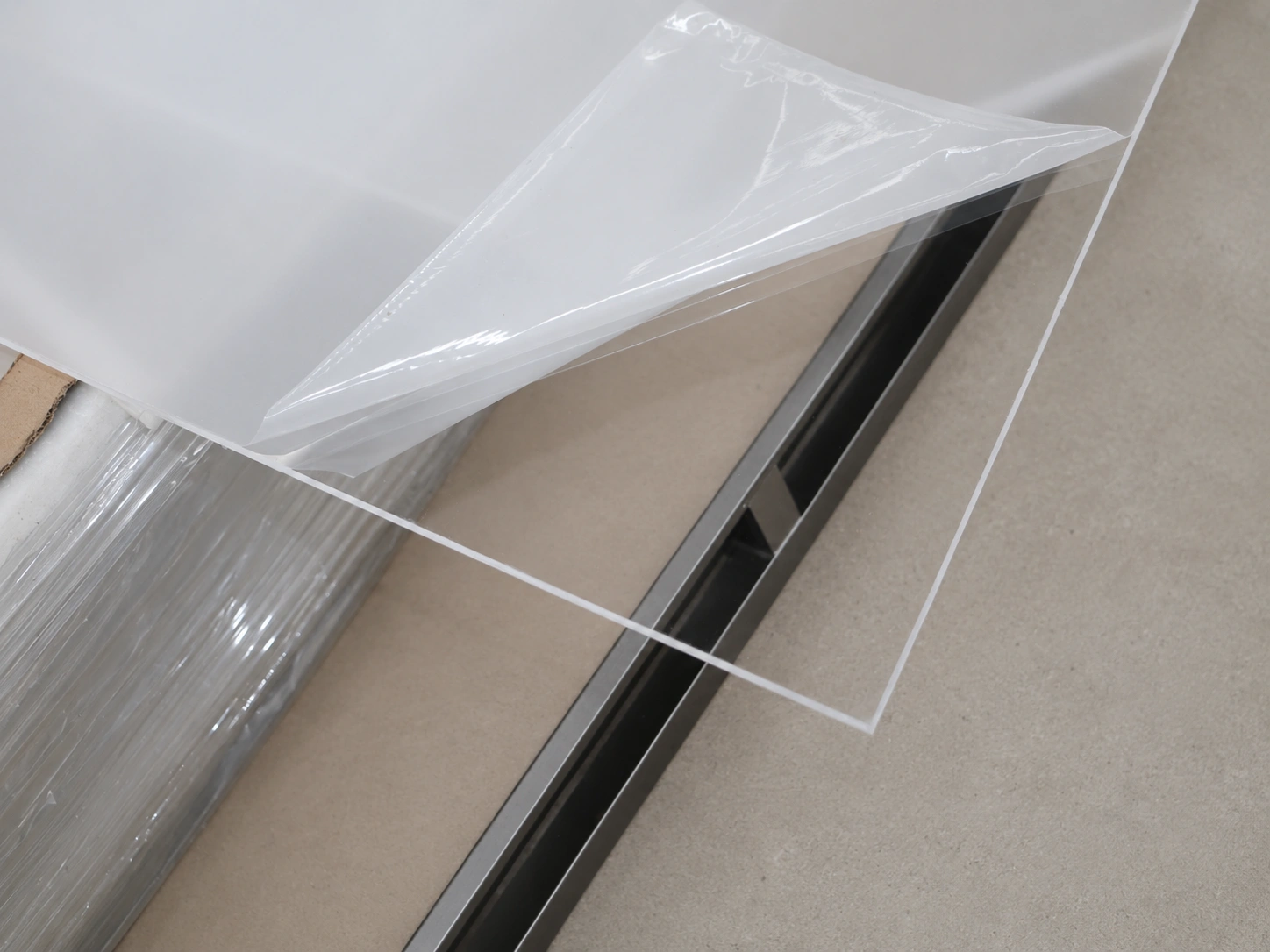
PMMA is widely supplied in the form of acrylic sheets, combining high optical clarity with relatively low weight, good weather resistance, and easy fabrication. These properties make it a practical alternative to glass for many commercial and industrial applications.
This guide explains what PMMA is, how it is manufactured, its main properties, where it is used, and how it compares with glass and polycarbonate.
What Does PMMA Stand For?
PMMA stands for polymethyl methacrylate.
It is a transparent thermoplastic produced from methyl methacrylate, commonly abbreviated as MMA.
Unlike thermosetting materials, PMMA softens when heated and can be shaped through processes such as thermoforming. It can also be cut, drilled, routed, polished, bonded, laser cut, and CNC machined.
PMMA was commercially developed in the early 1930s. Today it is manufactured in several forms, including:
- Acrylic sheets
- Acrylic blocks
- Acrylic rods
- Acrylic tubes
- Acrylic films
- Acrylic resins
For sheet applications, the two most common types are cast acrylic sheet and extruded acrylic sheet.
Properties of PMMA
The popularity of PMMA comes from a combination of optical, mechanical, and fabrication properties.
92%
Visible Light Transmission
High Optical Clarity
Clear PMMA can provide visible light transmission of approximately 92%, depending on the specific grade and sheet configuration.
This high transparency makes clear acrylic sheet particularly suitable for applications where appearance and visibility are important, including:
Display cases
Retail displays
Signs
Lighting panels
Transparent partitions
Machine covers
Architectural glazing
Furniture
Quality acrylic can maintain excellent clarity even at relatively high thicknesses.
01
Lightweight
Acrylic is significantly lighter than conventional glass.
This reduces the weight of finished products and can make large panels easier to transport, handle, install, and support.
The weight advantage is particularly useful for large display panels, ceiling installations, exhibition structures, retail fixtures, signs, and interior decorative panels.
02
Good Weather Resistance
PMMA is widely used for outdoor applications because of its resistance to weathering and ultraviolet exposure.
High-quality acrylic sheets can maintain transparency and appearance during long-term outdoor use, making the material suitable for exterior signs, architectural panels, skylights, protective covers, and outdoor displays.
03
Easy to Fabricate
PMMA can be processed using many conventional plastic fabrication methods, including laser cutting, sawing, CNC routing, drilling, engraving, polishing, heat bending, thermoforming, bonding, and printing.
Laser Cutting
Sawing
CNC Routing
Drilling
Engraving
Polishing
Heat Bending
Thermoforming
Bonding
Printing
This makes acrylic particularly useful for projects requiring customized dimensions or shapes.
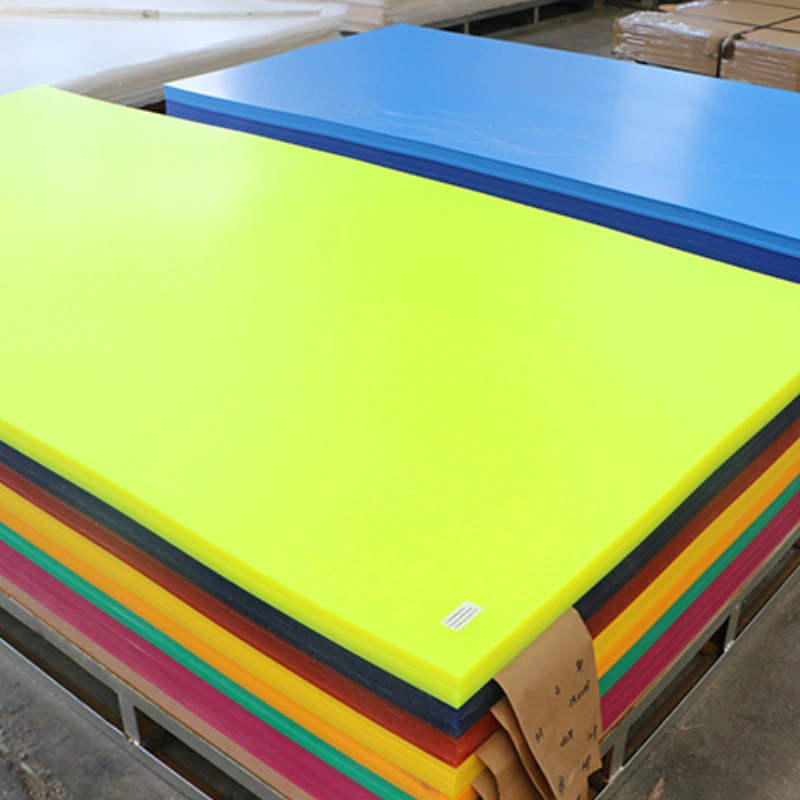
Wide Range of Colors and Surface Finishes
PMMA is not limited to clear sheets.
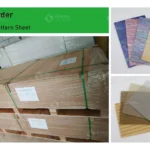
Colored acrylic sheets are available in transparent, translucent, and opaque colors for signage, branding, displays, furniture, and decorative fabrication.
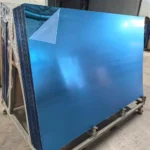
Other options include white and black acrylic, matte surfaces, frosted acrylic sheets, textured finishes, glitter acrylic, fluorescent acrylic, and mirror acrylic sheets.
Clear
Colored
White
Black
Matte
Frosted
Textured
Glitter
Fluorescent
Mirror
This gives designers and fabricators much greater flexibility than many conventional transparent materials.
Typical PMMA Properties
Properties vary according to acrylic grade, manufacturing method, thickness, additives, and test standard.
| Property | Typical Characteristic |
|---|---|
| Material | Polymethyl Methacrylate |
| Abbreviation | PMMA |
| Material Type | Thermoplastic |
| Appearance | Clear, translucent or opaque |
| Clear Light Transmission | Up to approximately 92% |
| Density | Approximately 1.18–1.19 g/cm³ |
| Surface | Glossy, matte, frosted or textured |
| Fabrication | Cutting, drilling, routing, laser cutting, thermoforming |
| Weather Resistance | Good |
| UV Performance | Good for suitable outdoor grades |
| Available Forms | Sheet, block, tube, rod, film |
Exact values should always be confirmed from the technical data sheet of the specific PMMA grade being purchased.
How Is PMMA Made?
PMMA is produced by polymerizing methyl methacrylate monomer into polymethyl methacrylate.
For acrylic sheets, the manufacturing method has a major influence on the final material characteristics.
The two principal production methods are casting and extrusion.
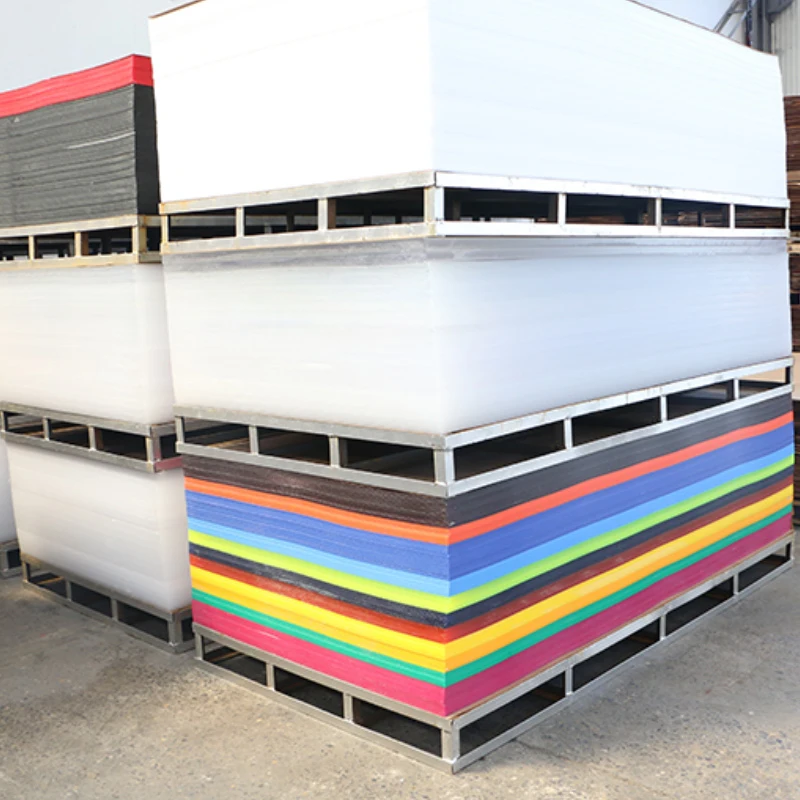
Cast Acrylic Sheet
Cast acrylic is commonly produced by introducing liquid MMA between two glass plates.
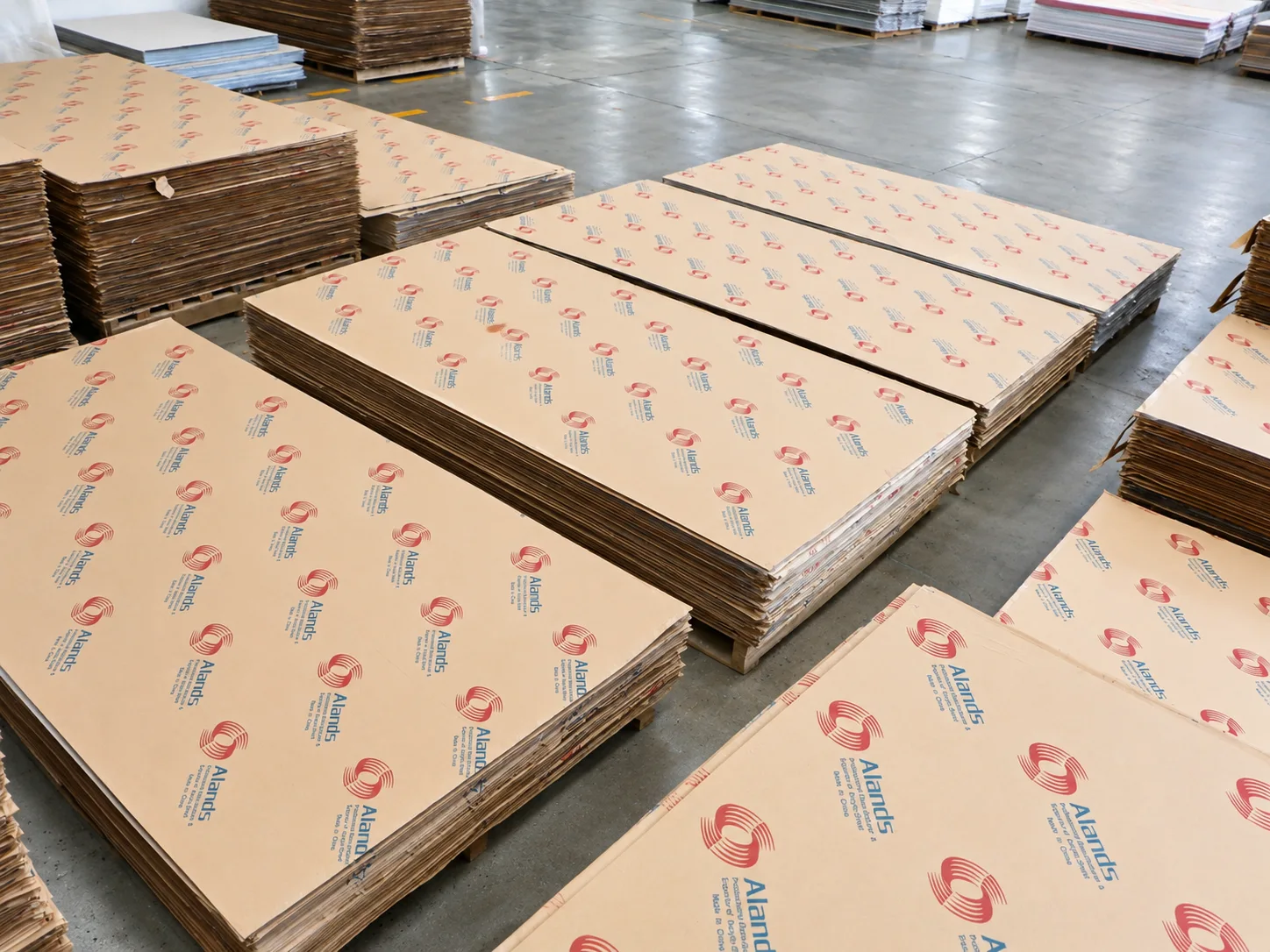
The material polymerizes and cures between the plates before the finished acrylic sheet is separated, inspected, protected with masking film, and prepared for further processing.
This manufacturing method allows considerable flexibility in sheet thickness, color, surface appearance, custom production, and specialized acrylic grades.
Cast acrylic generally has a higher molecular weight than extruded acrylic. This can provide advantages for machining, chemical resistance, thick-sheet production, and certain demanding fabrication applications.
For projects requiring high transparency and extensive secondary processing, premium cast clear acrylic sheet is commonly used for laser cutting, CNC routing, drilling, polishing, displays, protective glazing, and custom fabrication.
Extruded Acrylic Sheet
Extruded acrylic is manufactured continuously.
PMMA material is melted and passed through extrusion equipment before being calibrated through rollers to produce a sheet with controlled dimensions.
Extrusion is highly efficient for producing large quantities of acrylic sheet with consistent thickness.
Extruded acrylic generally offers tighter thickness tolerance, efficient high-volume production, competitive cost, good optical clarity, fast thermoforming, and consistent sheet dimensions.
Cast Acrylic vs Extruded Acrylic
Neither material is automatically better for every application.
The correct choice depends on how the sheet will be processed and used.
| Cast Acrylic | Extruded Acrylic |
|---|---|
| Higher molecular weight | Lower molecular weight |
| Wide thickness range | Tighter thickness tolerance |
| Good for machining | Efficient for high-volume production |
| Good chemical resistance | Generally lower cost |
| Suitable for custom colors | Consistent production |
| Good for laser cutting and engraving | Easy to thermoform |
| Common for thick acrylic sheets | Common for standard sheet applications |
For projects involving extensive machining, customized colors, thick sheets, or specialty fabrication, cast acrylic is often selected.
For applications requiring consistent thickness, large production volumes, or cost-efficient standard sheets, extruded acrylic may be more suitable.
What Is PMMA Used For?
PMMA is used across a wide range of industries because it combines transparency, appearance, durability, and easy fabrication.
Signs and Advertising Displays
Acrylic sheet is widely used for illuminated signs, logo panels, letter signs, menu displays, advertising panels, light boxes, and directional signage.
Clear, colored, translucent, and light-diffusing acrylic grades provide different visual effects for signage projects.
Retail Displays
Acrylic is commonly fabricated into product display stands, cosmetic displays, counter displays, shelving, display boxes, brochure holders, and point-of-sale displays.
Its clean surface and high transparency help keep the focus on the displayed product.
Lighting
PMMA is extensively used in lighting applications because of its optical performance.
Applications include LED light panels, diffusers, decorative lighting covers, light guide components, lamp shades, and illuminated signs.
Different translucent and diffusing acrylic grades can be selected according to the required light distribution.
Furniture and Interior Decoration
Colored, clear, frosted, mirror, and textured acrylic sheets are frequently used in furniture, cabinet panels, decorative walls, shelving, partitions, interior design features, and exhibition installations.
Acrylic provides designers with a combination of color, transparency, surface finish, and fabrication flexibility.
Architecture and Construction
PMMA may also be used for skylights, transparent barriers, interior partitions, decorative architectural panels, canopies, protective glazing, and display windows.
The lower weight compared with glass can be advantageous for large fabricated structures.
Industrial Fabrication
Industrial uses include machine guards, equipment covers, observation windows, transparent housings, instrument panels, protective barriers, and custom fabricated components.
For applications requiring greater sheet thickness and rigidity, thick acrylic sheets are available for protective covers, display structures, partitions, furniture, signage, and other commercial or industrial fabrication.
The final material selection should consider impact requirements, operating temperature, chemicals, sheet thickness, and fabrication method.
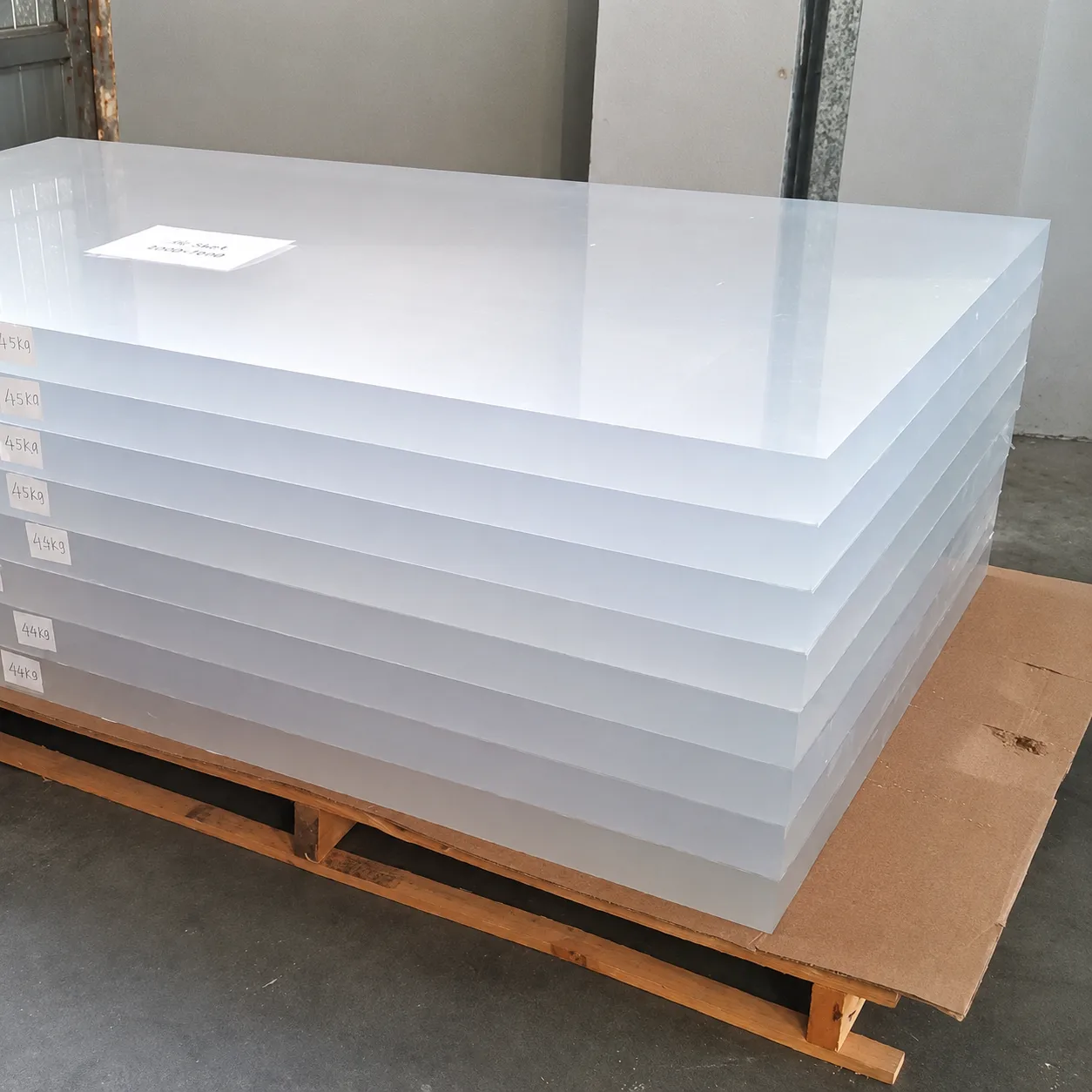
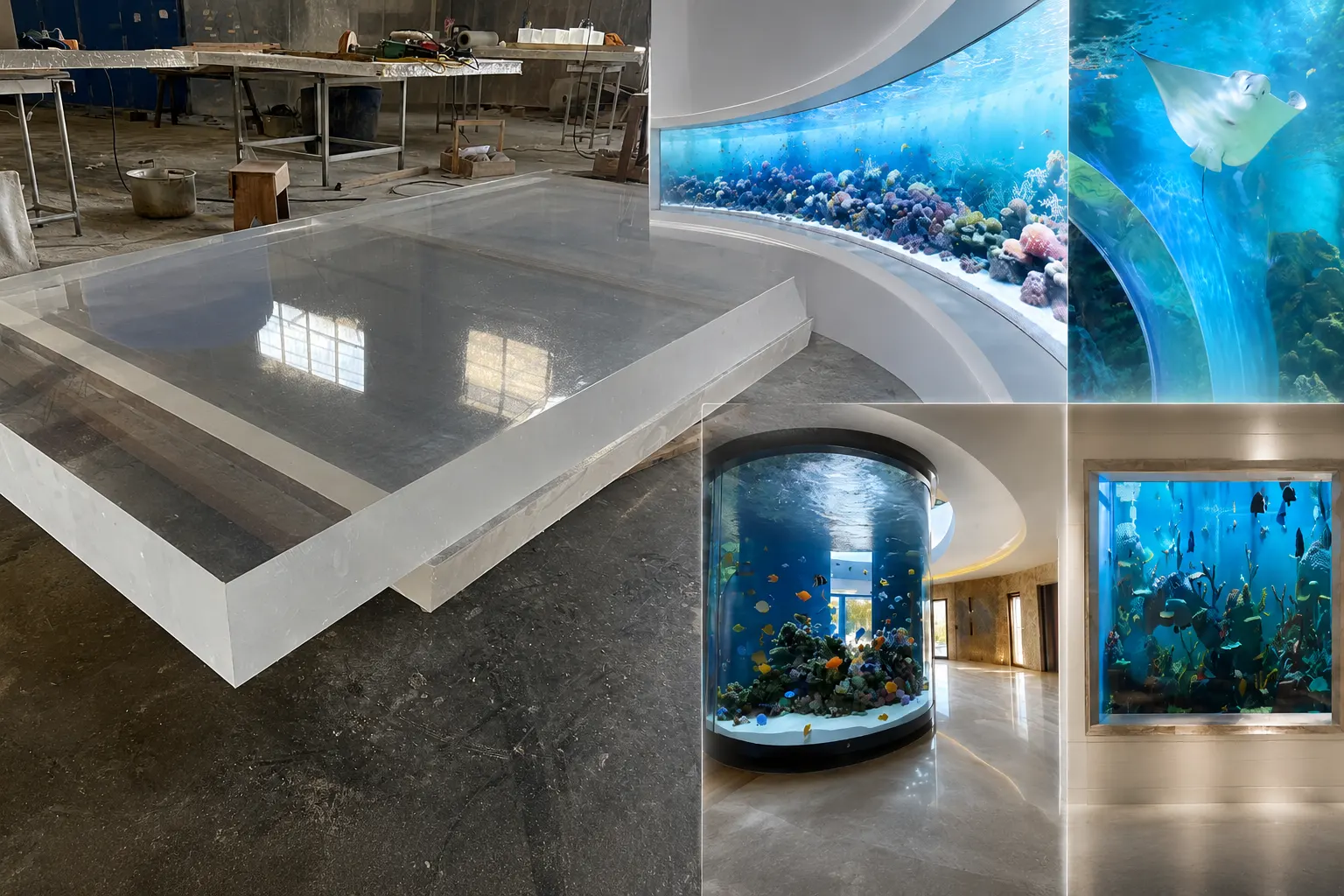
Aquariums and Large Transparent Panels
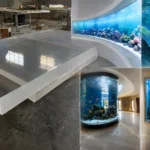
PMMA is also widely used for aquarium fabrication because of its high transparency, lower weight compared with glass, and suitability for bonding and polishing.
For these applications, panel thickness must be selected according to aquarium dimensions, water depth, panel span, and structural design. Alands supplies aquarium acrylic sheets for aquarium and large transparent panel applications.
PMMA vs Glass
PMMA is frequently considered as an alternative to glass, but the two materials have different advantages.
Advantages of PMMA
- Lower weight
- Easy cutting and machining
- Easy drilling
- Thermoforming capability
- Wide color selection
- High optical clarity
- Easier production of complex shapes
These characteristics make acrylic especially useful for signs, displays, furniture, exhibitions, lighting, and fabricated plastic components.
Advantages of Glass
Glass normally provides greater surface scratch resistance, higher temperature resistance, higher rigidity, and better resistance to some chemicals.
Standard acrylic should therefore not simply be described as “better than glass.”
Material selection depends on the application.
If low weight, fabrication flexibility, color, and shaping are important, PMMA may be more practical.
If maximum surface hardness or higher temperature performance is required, glass may be more appropriate.
PMMA vs Polycarbonate
PMMA and polycarbonate are both transparent thermoplastics, but they are used for different reasons.
PMMA is normally selected when optical clarity, surface appearance, weather resistance, and display quality are important.
Polycarbonate is usually selected when very high impact resistance is the primary requirement.
| PMMA Acrylic | Polycarbonate |
|---|---|
| Excellent optical clarity | Very high impact resistance |
| High light transmission | High toughness |
| Good outdoor appearance | Suitable for demanding safety applications |
| Easy to polish | Difficult to polish to the same appearance |
| Wide decorative range | Functional engineering applications |
| Common in signs and displays | Common in guards and protective glazing |
For display cases, illuminated signs, decorative panels, retail fixtures, and furniture, acrylic is frequently preferred.
For high-impact machine guards, safety glazing, and applications where toughness is the main consideration, polycarbonate may be more suitable.
How to Choose a PMMA Acrylic Sheet
Buying acrylic sheet should involve more than selecting a thickness.
For commercial and industrial projects, buyers should consider several factors.
01
Cast or Extruded
Choose the manufacturing process according to the required fabrication method, thickness tolerance, quantity, and application.
02
Thickness
The required thickness depends on panel dimensions, structural load, installation method, required rigidity, and fabrication process.
Larger unsupported panels generally require greater thickness.
03
Color
PMMA can be manufactured in standard colors or customized colors for larger projects.
When color consistency is important, buyers should provide a physical sample, Pantone reference, or other agreed color standard whenever possible.
04
Surface Finish
Available options can include gloss, matte, frosted, textured, mirror, and other decorative finishes.
Surface selection affects both appearance and fabrication.
05
Outdoor or Indoor Use
For outdoor applications, confirm that the acrylic grade is suitable for long-term UV and weather exposure.
06
Fabrication Requirements
Inform the supplier when sheets will be laser cut, CNC machined, thermoformed, printed, bonded, or polished.
The intended processing method can influence the recommended acrylic grade.
Is PMMA Recyclable?
PMMA is a thermoplastic and can be recycled through suitable recycling processes.
Recycling systems can mechanically process acrylic scrap or recover MMA feedstock through more specialized recycling technologies.
For manufacturers and fabricators, separating clean acrylic offcuts from other plastics can improve the possibility of material recovery.
Actual recycling options depend on local infrastructure and the type of PMMA waste.
PMMA Acrylic Sheet for Commercial Projects
PMMA remains one of the most versatile transparent sheet materials available to manufacturers, fabricators, designers, sign companies, distributors, and construction suppliers.
Its combination of transparency, low weight, weather resistance, color flexibility, and easy processing allows the material to serve applications ranging from simple display panels to large customized architectural and industrial projects.
For buyers, the most important step is selecting the appropriate acrylic type rather than simply purchasing a generic “plastic sheet.”
Alands supplies acrylic sheet products for commercial and industrial projects with options for different thicknesses, colors, surface finishes, sheet dimensions, and customized production.
For bulk acrylic sheet requirements, providing the required sheet size, thickness, color, quantity, application, and fabrication method will help the manufacturer recommend the appropriate PMMA sheet and prepare an accurate quotation.
Frequently Asked Questions About PMMA
Is PMMA the same as acrylic?
Yes. PMMA is the chemical name of the thermoplastic commonly referred to as acrylic or acrylic glass.
Is PMMA the same as Plexiglass?
PMMA is the material. PLEXIGLAS® is a registered brand of PMMA. The word “plexiglass” is also commonly used informally to describe acrylic sheet.
Is PMMA better than glass?
Neither material is better for every application. PMMA is lighter and easier to fabricate, while glass normally provides better scratch resistance and higher temperature resistance.
Is PMMA suitable for outdoor use?
Suitable acrylic grades offer very good resistance to UV exposure and weathering and are widely used for outdoor signs, glazing, displays, and architectural applications.
What is the difference between cast and extruded PMMA?
Cast PMMA generally offers a wider thickness range, good machining properties, and greater customization flexibility. Extruded PMMA generally provides tighter thickness tolerance and efficient high-volume production.
Can PMMA be laser cut?
Yes. Acrylic is one of the most commonly laser-cut sheet plastics. The cutting result depends on the acrylic type, thickness, laser equipment, and processing parameters.
What information should I provide when requesting an acrylic sheet quotation?
For a commercial quotation, provide the required sheet size, thickness, color, quantity, surface finish, application, and any cutting or fabrication requirements.