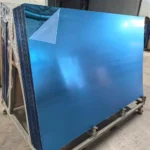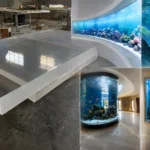




Cut to Size Acrylic Sheets: 3 Effective Methods to Cut Acrylic
When working with acrylic, also known as plexiglass or PMMA, accurate cutting is essential for obtaining cut to size acrylic sheets with clean edges and consistent dimensions.
Whether the material is used for signage, display cases, protective panels, furniture, lighting components, or industrial fabrication, the cutting method should match the acrylic thickness, required edge quality, production volume, and final application.
Three common methods are scoring, table saw cutting, and laser cutting. Each method offers different advantages for acrylic sheet processing.
1. Cutting Acrylic Sheets with a Scoring Knife
Best for: Thin acrylic sheets, generally below 3mm.
Scoring is one of the simplest methods for making straight cuts in thin acrylic sheet. The surface is scored repeatedly along a straight line and the sheet is then snapped along the groove.
This method requires little equipment and is practical for samples, prototypes, small quantities, and simple rectangular pieces.
How to Cut Acrylic with a Scoring Knife
- Measure the required dimensions and mark a straight cutting line.
- Place a metal ruler or straight guide firmly along the line.
- Score the acrylic repeatedly using firm and even pressure.
- Position the scored line close to the edge of a stable work surface.
- Apply controlled pressure until the acrylic breaks along the scored line.
- Sand or polish the cut edge if a smoother finish is required.
No powered cutting machine is required for simple straight cuts.
A practical solution for thin PMMA sheets and basic rectangular parts.
Useful for samples, prototypes, and low-volume fabrication.
Scoring is not recommended for thick acrylic sheets, curved shapes, or parts requiring high dimensional accuracy. The cut edge may also need sanding or polishing.
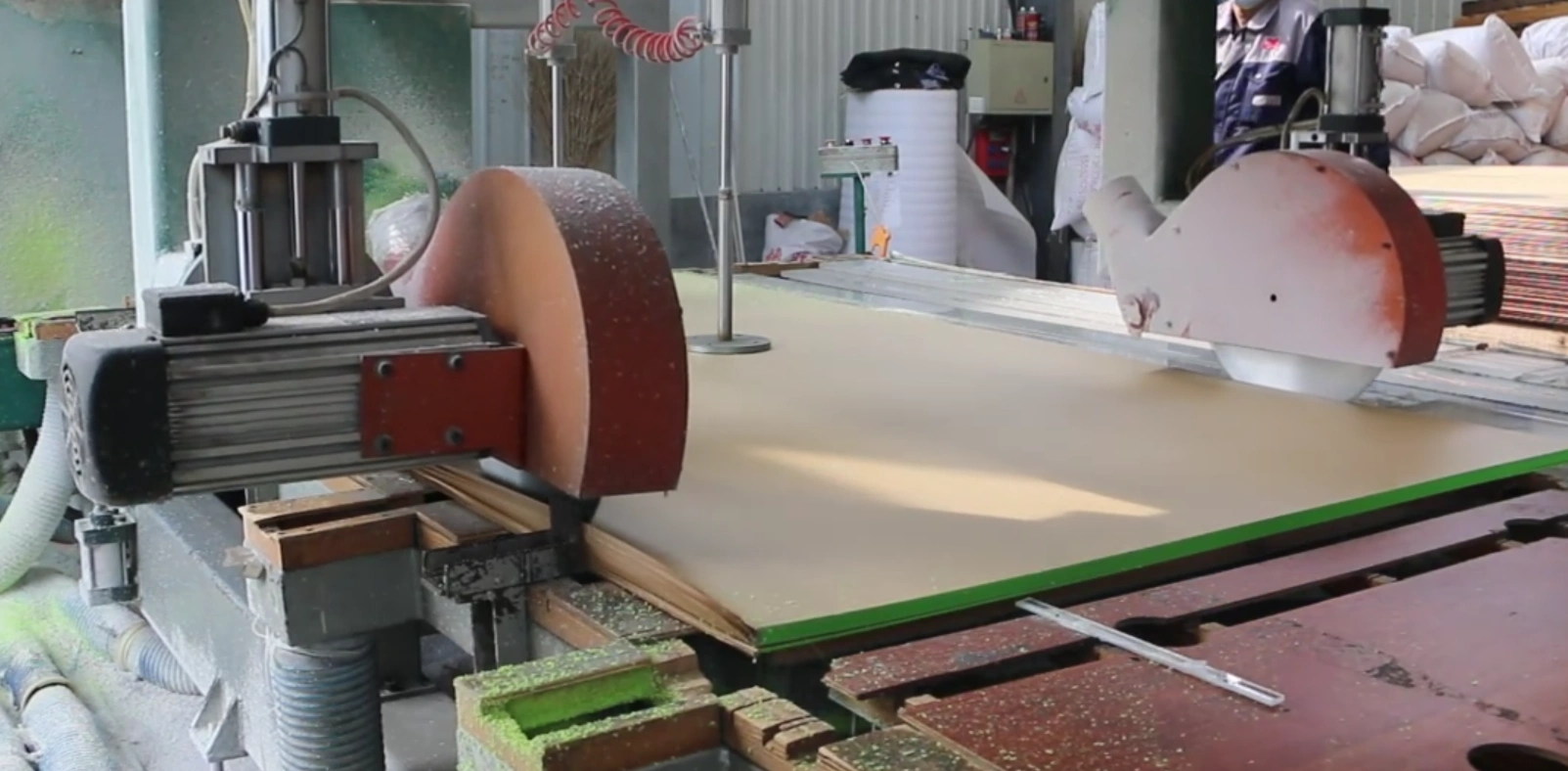
2. Cutting Acrylic Sheets with a Table Saw
Best for: Medium and thick acrylic sheets, long straight cuts, and repeat production.
A table saw is widely used for cutting acrylic panels to standard rectangular dimensions. Compared with manual scoring, it offers higher cutting speed and better consistency when processing multiple sheets.
A fine-tooth carbide-tipped blade designed for plastics is recommended to help reduce chipping and excessive heat during cutting.
Table Saw Cutting Guidelines
- Use a fine-tooth carbide blade suitable for plastic sheet materials.
- Keep the acrylic sheet fully supported during cutting.
- Maintain a stable and controlled feed rate.
- Avoid feeding too slowly, which may generate excessive heat.
- Avoid feeding too quickly, which may increase chipping.
- Keep the protective film on the sheet where practical to reduce surface scratches.
Suitable for long cuts and standard rectangular acrylic panels.
Useful when multiple sheets need to be processed to the same size.
More suitable than manual scoring for medium and thicker acrylic sheets.
Correct blade selection, sheet support, and feed speed are important. Improper cutting conditions can cause chipping, vibration, or local melting along the cut edge.
3. Cutting Acrylic Sheets with a Laser Cutter
Best for: Precision parts, lettering, complex shapes, decorative panels, and customized components.
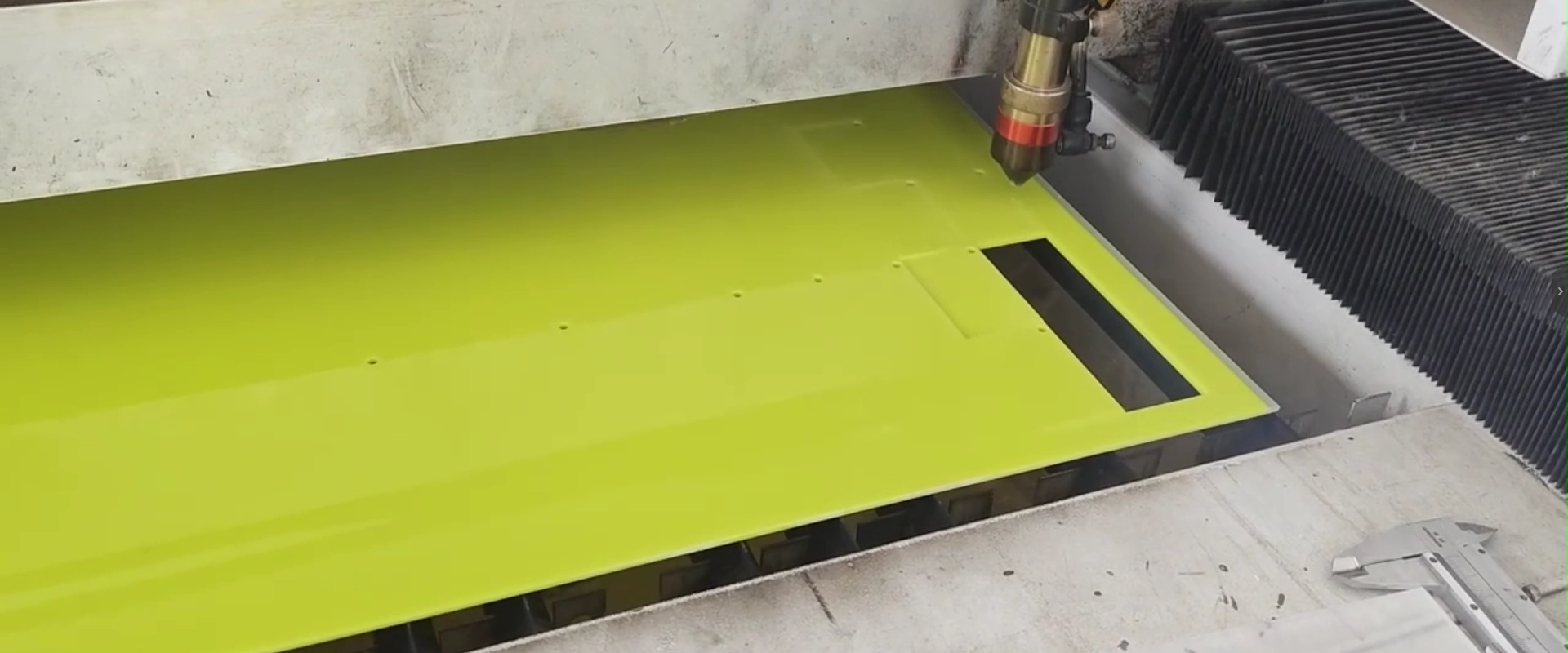
Laser cutting uses a focused beam to cut through acrylic without mechanical contact. It is particularly useful where accurate shapes, detailed patterns, lettering, or smooth edges are required.
Depending on the acrylic type, thickness, machine power, cutting speed, and optical system, laser processing can produce clean edges with little additional finishing.
Suitable for detailed shapes, lettering, holes, patterns, and customized components.
No cutting blade touches the material during the process.
Correct settings can produce smooth and visually attractive acrylic edges.
Curves and detailed geometries can be produced directly from digital drawings.
Widely used for signage, displays, decorative panels, and branded components.
Digital cutting files support consistent reproduction of customized parts.
Laser cutting requires specialized equipment. Maximum practical thickness depends on the acrylic material, laser power, optical configuration, required edge quality, and production speed.
Comparing Acrylic Sheet Cutting Methods
| Method | Suitable Material | Best Application | Edge Quality |
|---|---|---|---|
| Scoring Knife | Thin acrylic sheet | Simple straight cuts and small quantities | May require sanding |
| Table Saw | Medium to thick acrylic sheet | Long straight cuts and repeat sizing | Good with correct blade and feed rate |
| Laser Cutting | Suitable acrylic thickness according to machine capability | Complex shapes, lettering, displays, and precision parts | Smooth finish with correct settings |
Which Method Should You Choose?
For thin sheets and simple straight cuts, scoring provides a practical low-equipment solution. For larger panels and repeated rectangular sizing, a table saw provides better productivity and consistency.
For signage, displays, decorative components, lettering, and complex shapes, laser cutting offers greater design flexibility and dimensional accuracy.
Industrial buyers should also consider production volume, dimensional tolerance, edge finish, material thickness, protective film requirements, and subsequent processes such as bonding, polishing, drilling, CNC machining, or thermoforming.
Cut to Size Acrylic Sheet for Commercial Projects
Alands supplies acrylic sheet materials for distributors, signage manufacturers, display manufacturers, furniture companies, advertising fabricators, and industrial buyers.
Customers requiring cut to size acrylic sheets can select appropriate sheet thickness, dimensions, color, and fabrication requirements according to the final application.
FAQ
For thin acrylic and simple straight cuts, a scoring knife is usually the simplest method.
Yes. A table saw equipped with a suitable fine-tooth blade can be used for medium and thicker acrylic sheets.
Yes. Laser cutting is widely used for PMMA signage, displays, lettering, decorative panels, and customized components.
It depends on the cutting method and the required finish. Saw-cut and scored edges may require sanding or polishing, while properly laser-cut edges can require less finishing.
Yes. Acrylic sheet dimensions, thicknesses, colors, and other project requirements can be discussed for commercial and bulk orders.