


How to Choose Frosted Acrylic Sheet: Privacy, Thickness, and Custom Specifications
Start with the required visual result, then select the color, frosted surface, and thickness.
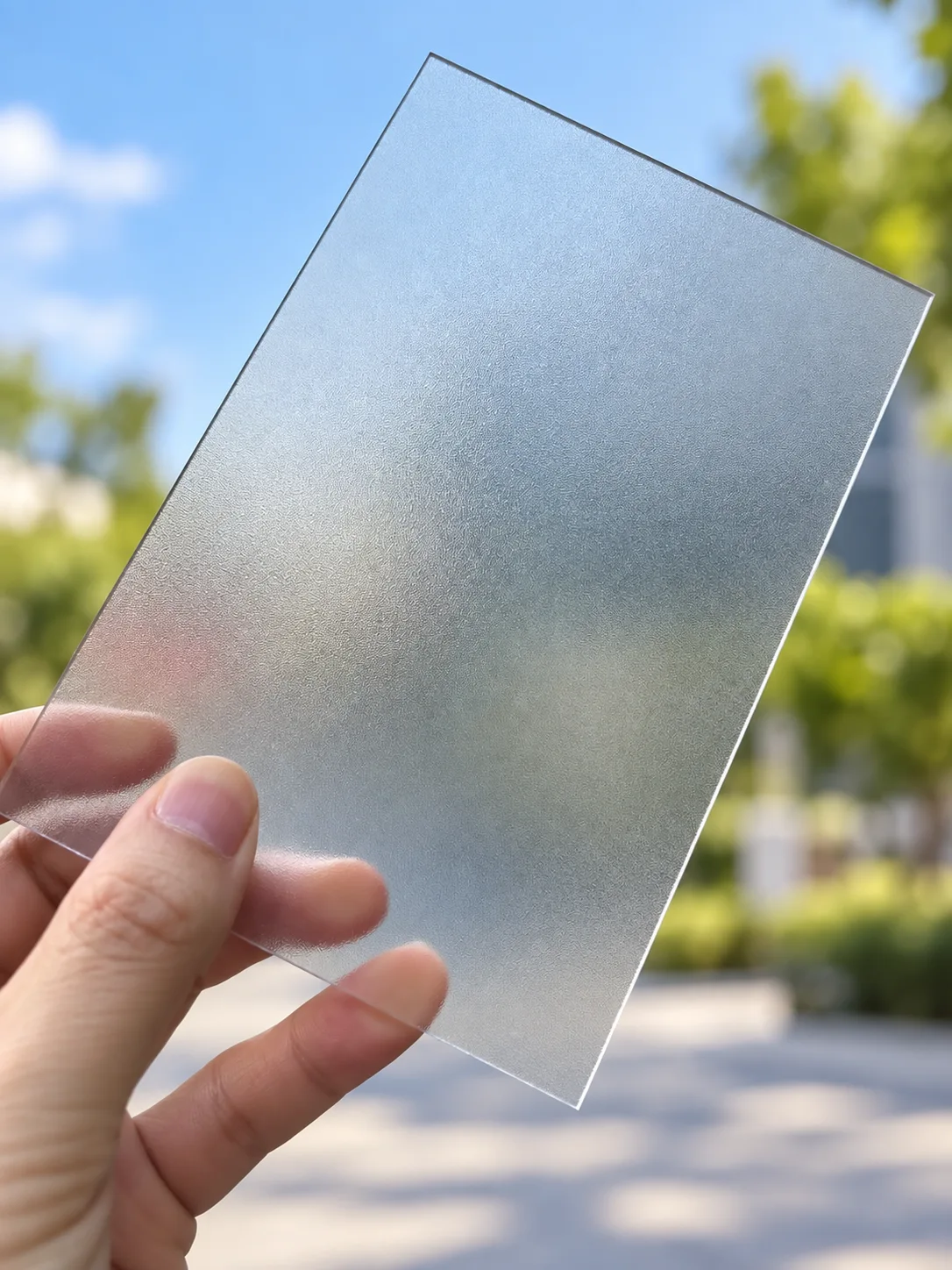
Choose Clear Frosted Acrylic when the project needs high light transmission while keeping objects behind the panel visible only as softened outlines.
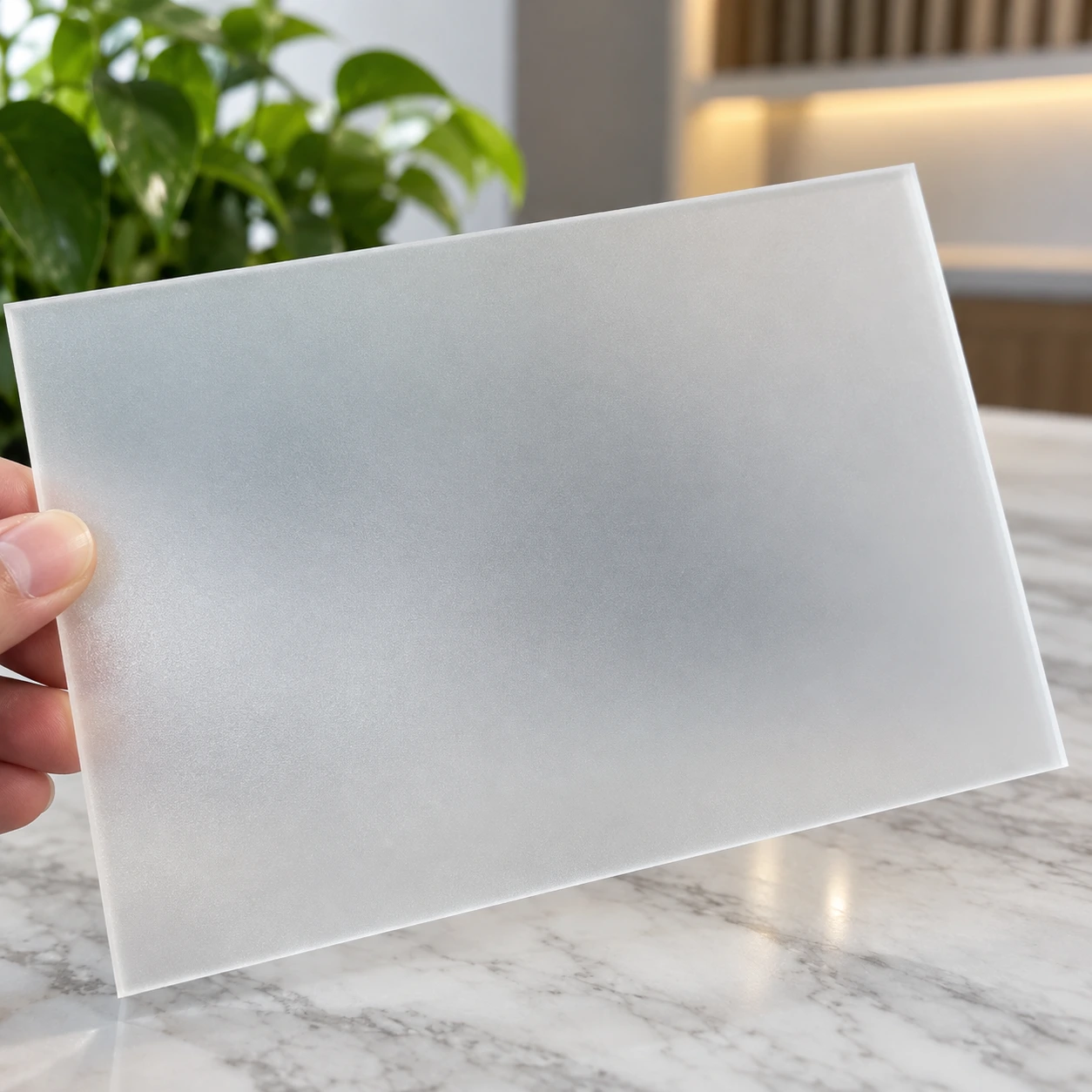
Choose Opal White or Milky White Frosted Acrylic when light transmission is still required but people, stored items, or background details need stronger visual blocking.
Choose Double-Sided Frosted Acrylic for office partitions, freestanding screens, and display structures where both faces remain visible.
Choose Single-Sided Frosted Acrylic when the front requires a matte finish while the reverse side will be printed, laminated, bonded, or processed.
For LED lightboxes with short LED-to-panel distances and visible hotspots, use Light-Diffusing Acrylic rather than relying only on a standard frosted surface.
For complete visual blocking, use a higher-opacity white sheet or opaque acrylic instead of increasing the thickness of clear frosted acrylic.
| Required Result | Recommended Material |
|---|---|
| Bright appearance with blurred outlines | Clear Frosted Acrylic |
| Light transmission with stronger visual blocking | Opal / Milky White Frosted Acrylic |
| Matte finish on both visible faces | Double-Sided Frosted Acrylic |
| Matte front with processable reverse side | Single-Sided Frosted Acrylic |
| Uniform LED illumination with reduced hotspots | Light-Diffusing Acrylic |
| Complete visual blocking | Acrylique opaque |
Clear, Opal, or Milky White: Which Frosted Acrylic Should You Choose?
The main difference is how much information remains visible through the sheet.
Clear Frosted Acrylic: High Light Transmission with Softened Outlines
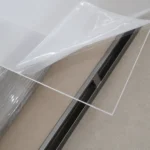
Clear frosted acrylic uses transparent PMMA with a frosted surface that reduces direct visibility and specular reflection without completely hiding the background.
Les applications typiques sont les suivantes
Display cabinets
Wine cabinets
Présentoirs de vente au détail
Furniture doors
Office screens
Signage and decorative panels
Objects placed close to the sheet remain visible by color and general shape, while labels, small text, and sharp edges become less defined.
This material works well when the design needs a translucent appearance without fully hiding the contents behind the panel.
Clear surface-frosted PMMA can retain very high light transmission. Some established frosted PMMA grades reach more than 90% light transmission, with the frosted appearance created mainly by light scattering rather than heavy light loss.
Opal White Frosted Acrylic: Light Transmission with Lower Background Visibility
Storage cabinets, office partitions, and interior decorative panels often need more visual blocking than clear frosted acrylic can provide.
Opal White Frosted Acrylic reduces the visibility of objects behind the panel while still allowing light to pass through.
It suits:
Storage cabinets
Filing cabinets
Cloisons de bureau
Interior screens
Soft-light decorative panels
Translucent doors
Compared with clear frosted acrylic, background colors and outlines become weaker and less distinct.
Milky White Frosted Acrylic: Softer White with Stronger Obscuring
Milky White Frosted Acrylic gives a softer white appearance and stronger visual separation from the background.
It works well for furniture and interior applications where the panel should transmit light without clearly revealing stored items or people behind it.
Clear Frosted, Opal White, and Milky White are different visual options rather than low-, medium-, and high-grade versions of the same material.
The selection depends on how much of the background should remain visible after installation.
Single-Sided or Double-Sided Frosted Acrylic?
The finished structure determines whether one or both faces need a frosted surface.
Single-Sided Frosted Acrylic
One side has a matte frosted finish while the other remains relatively smooth.
Suitable for:
Cabinet doors
Sign panels
Display panels
UV-printed sheets
Parts requiring film application or bonding on the reverse side
A retail display panel, for example, may need a low-glare frosted front while the rear side remains suitable for printing or adhesive graphics.
Double-Sided Frosted Acrylic
Both surfaces carry a frosted finish.
Suitable for:
Cloisons de bureau
Freestanding screens
Meeting-room dividers
Open display systems
Double-sided decorative panels
Both viewing directions retain a consistent matte appearance without one side showing a noticeably glossier surface.
What Thickness of Frosted Acrylic Should You Choose?
Thickness depends mainly on finished panel size, unsupported span, and fixing method.
A small cabinet door fully supported by a surrounding frame can use a thinner sheet.
A desk divider held only along the bottom edge needs greater stiffness at the same panel size.
Large frameless screens, commercial partitions, and long-span panels require thicker acrylic or additional structural support.
The following ranges can be used for initial selection:
| Application / Structure | Starting Thickness Range |
|---|---|
| Small cabinet doors, signs, fully framed panels | 3–4.5 mm |
| Furniture panels, medium display panels | 4.5–6 mm |
| Desk dividers, office partitions | 6–10 mm |
| Large panels with limited support | 9–12 mm |
| Frameless or large structural panels | 12 mm+ depending on span |
Increasing thickness mainly improves stiffness and flatness.
If privacy is insufficient, changing a 3 mm Clear Frosted sheet to 10 mm Clear Frosted is rarely the best first step. Opal White, Milky White, or a higher-opacity material will change the visual blocking more effectively.
Frosted Acrylic for Office Partitions
Office partitions usually need daylight transmission, visual separation, and enough stiffness for larger panel sizes.
For bright offices and open interiors:
Clear Double-Sided Frosted Acrylic
is a practical starting point.
It keeps the space bright while reducing the visibility of faces, monitors, documents, and desk details.
For meeting rooms, private offices, and spaces requiring stronger visual separation:
Opal White or Milky White Double-Sided Frosted Acrylic
provides stronger background blocking.
Thickness should then be matched to the panel size and fixing method.
For example:
1200 × 700 mm desk divider
A thickness around 6 mm can be used as an initial reference. A fully framed structure may allow a thinner panel after checking stiffness.
Full-height partition approaching 2 m
The suitability of 6 mm depends on panel width, frame design, and fixing points. Wider panels or structures with limited support may require 9 mm, 12 mm, or additional framing.
Select the optical effect first, then set the structural thickness.
Frosted Acrylic for Cabinet Doors
Furniture applications are easier to specify when the desired visibility of the cabinet interior is clear.
Display Cabinets and Wine Cabinets
When the products inside remain part of the visual design:
Clear Frosted Acrylic
keeps product colors and broad outlines visible while reducing direct glare and fine detail.
Small framed doors can often start from 3–4.5 mm.
Storage Cabinets and Kitchen Cabinets
When light should pass through but internal clutter should remain less visible:
Opal White or Milky White Frosted Acrylic
works better than clear frosted sheet.
Typical framed cabinet doors can also start from 3–4.5 mm, then increase according to panel height, width, and hardware design.
Fully Concealed Cabinet Doors
When the contents should not be visible:
Opaque White, Black, or another Opaque Acrylic
is more suitable than using increasingly thick Clear Frosted Acrylic.
LED Lightboxes Require a Different Material Selection Method
A standard frosted surface can soften light, but LED lightboxes also need control over individual light-source hotspots.
When the LED-to-panel distance is large enough and the LED pitch is relatively tight, standard frosted acrylic may provide acceptable light uniformity.
As the lightbox becomes thinner and the LEDs move closer to the panel, individual hotspots become harder to hide.
These projects should be evaluated using dedicated light-diffusing materials.
Two specifications are especially relevant:
Transmission de la lumière
Diffusion Angle / Half Angle
Typical lighting-grade PMMA diffusion options may look like this:
| Transmission de la lumière | Half Angle | Selection Direction |
|---|---|---|
| 92% | 20° | High brightness, light diffusion |
| 85% | 30° | Balance of brightness and diffusion |
| 79% | 40° | Stronger LED mixing |
| 72% | 50° | Strong diffusion for difficult hotspots |
A larger diffusion angle spreads the light over a wider area and improves LED mixing, while light transmission usually decreases.
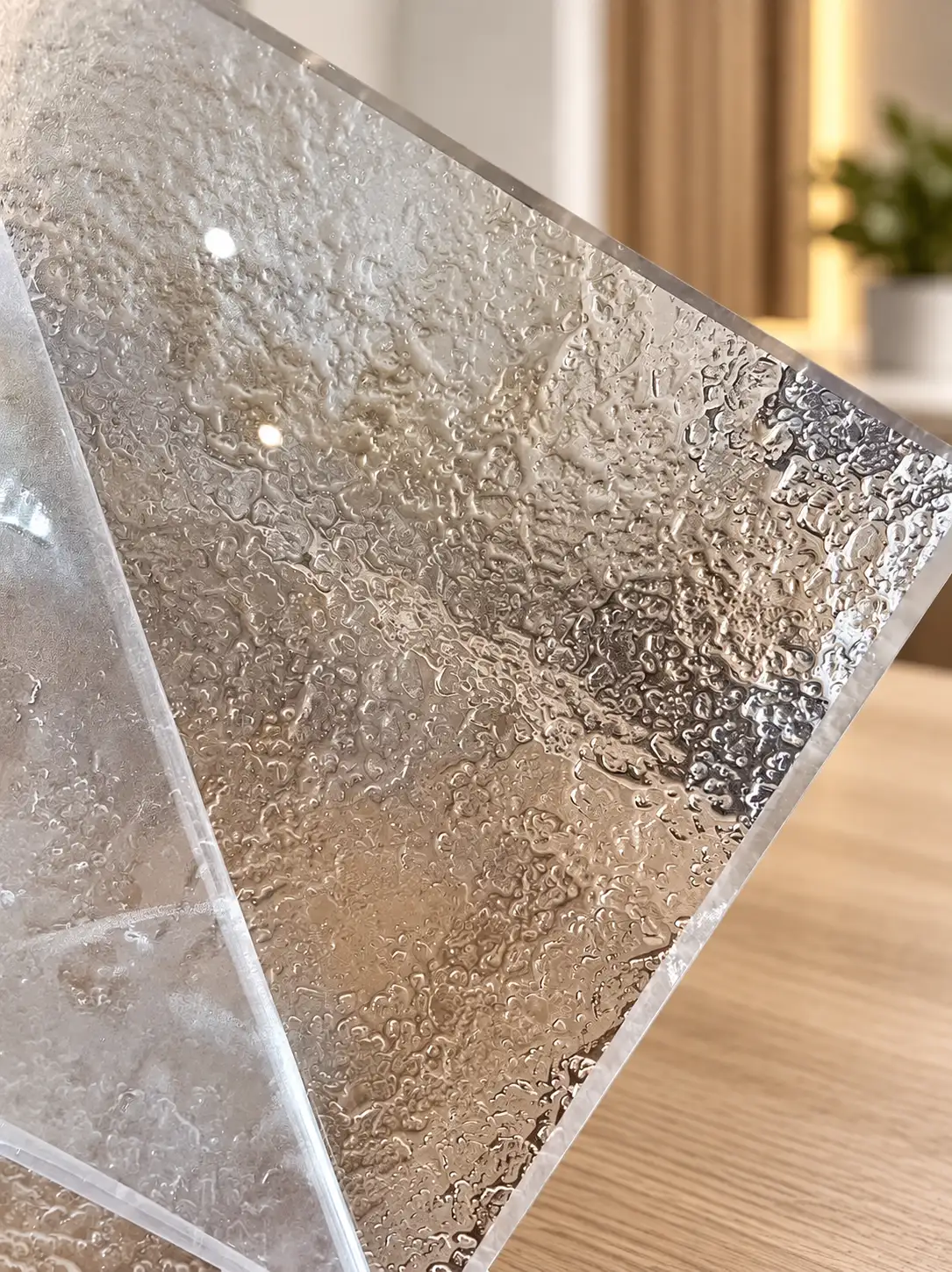
Standard surface-frosted acrylic and internally diffusing PMMA also use different optical structures. Dedicated diffuser sheets can contain diffusion particles throughout the material, making them better suited to luminaires, linear LEDs, and shallow backlit structures.
For lightbox projects, provide:
LED pitch + LED-to-panel distance + panel size + required brightness
These parameters are more useful than specifying only a sheet thickness.
What Frosted Acrylic Specifications Can Alands Supply?
Alands manufactures frosted acrylic sheet using 100% virgin PMMA. Current 3 mm products are Cell Cast Acrylic with a Frosted / Matte surface. Standard sheets, custom sizes, and further fabrication are available for bulk orders.
Gamme d'épaisseur
Available frosted acrylic thicknesses include:
1.8 mm / 2 mm / 3 mm / 4.5 mm / 6 mm / 9 mm / 12 mm / 18 mm / 25.4 mm / 30 mm
Additional thicknesses can be confirmed for bulk production.
Taille des feuilles
The common 1220 × 2440 mm / 4 × 8 ft format is available, together with larger and alternative sheet formats:
| Taille de la feuille |
|---|
| 1220 × 1830 mm |
| 1220 × 2440 mm |
| 1220 × 2420 mm |
| 1220 × 1820 mm |
| 1250 × 1850 mm |
| 1250 × 2450 mm |
| 1500 × 2100 mm |
| 1600 × 2600 mm |
| 1850 × 2450 mm |
| 2050 × 3050 mm |
| 1 020 × 2 020 mm |
Large office partitions, commercial display walls, and decorative panels can be nested on 1600 × 2600 mm, 1850 × 2450 mm, or 2050 × 3050 mm sheets to reduce joints and material waste.
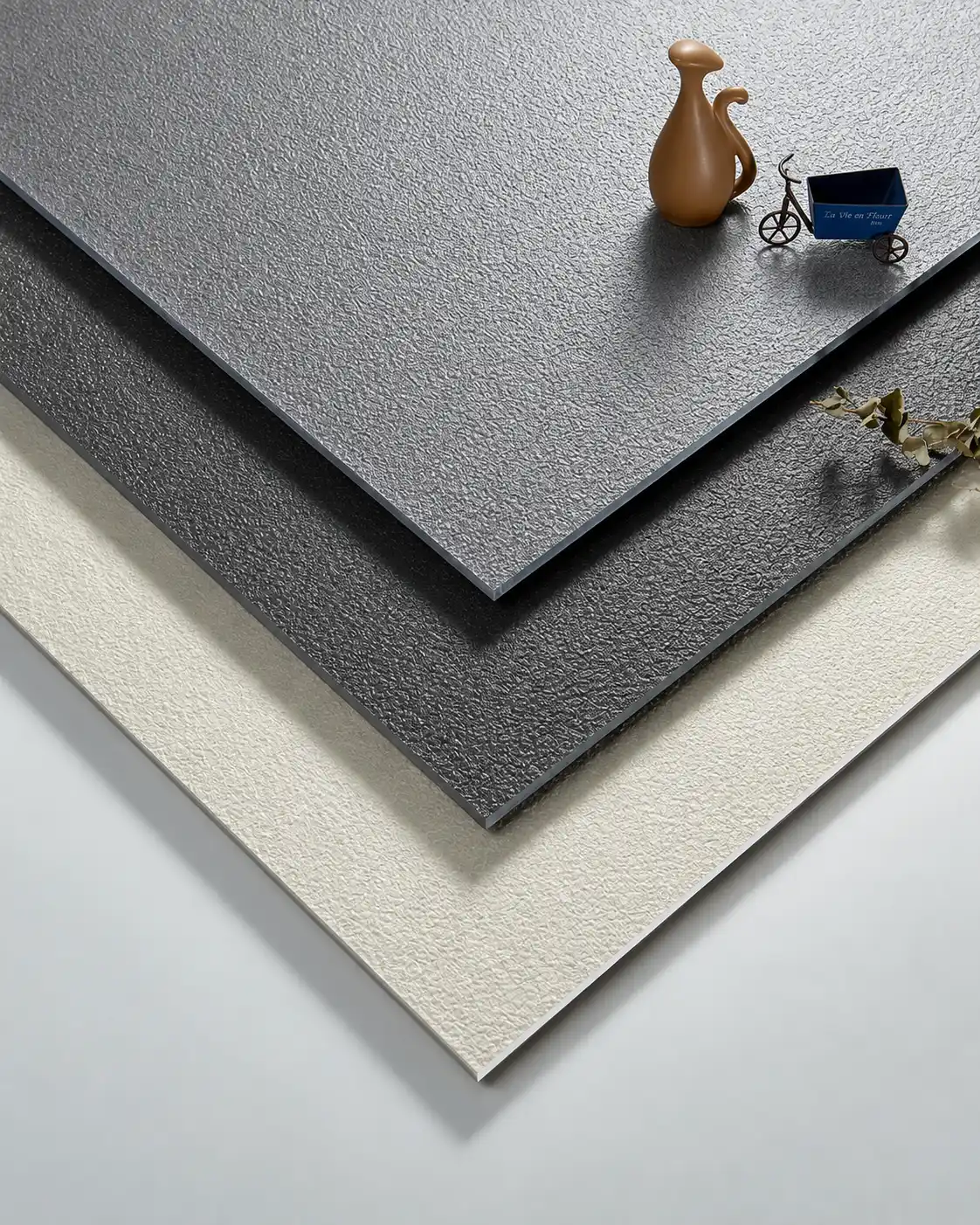
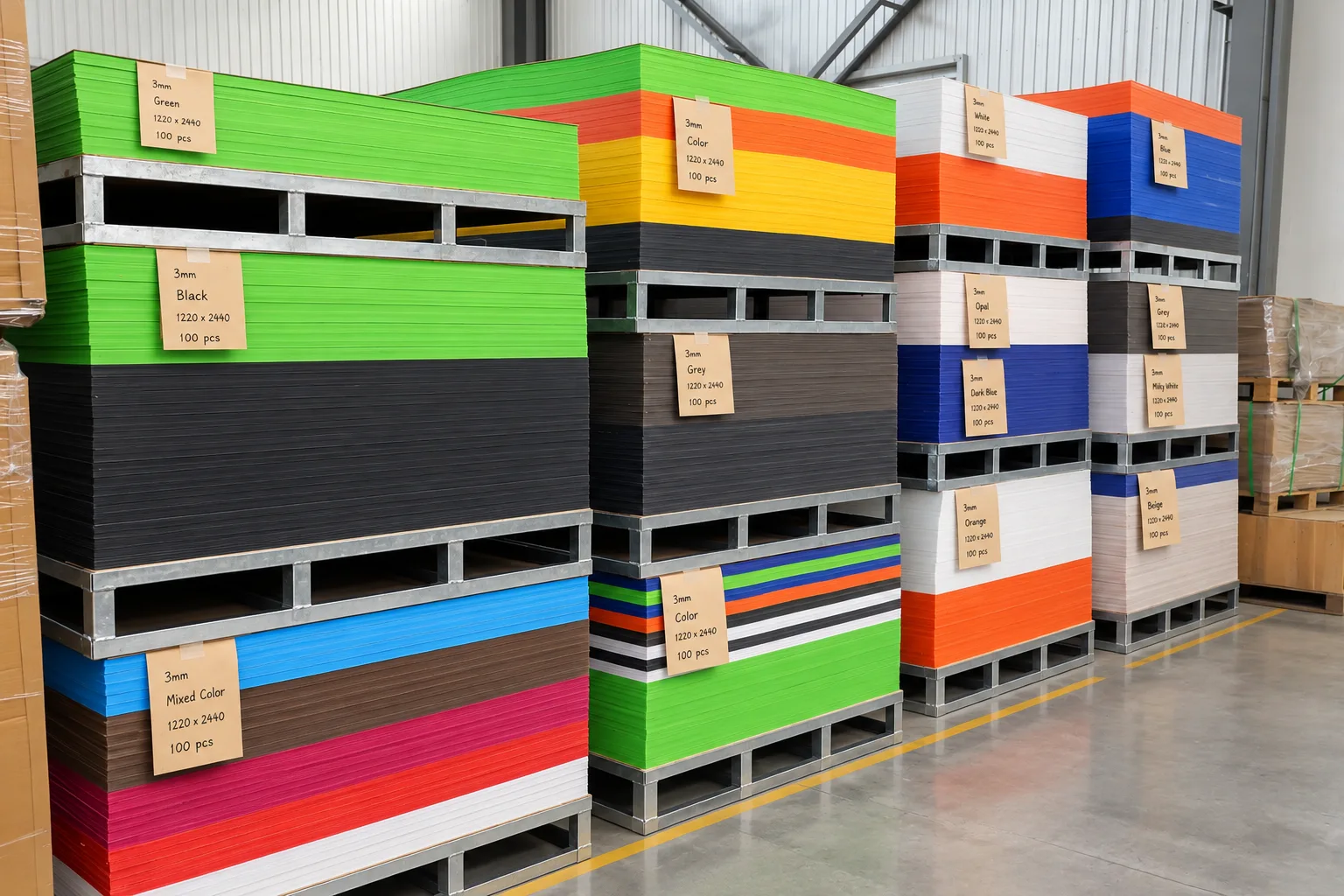
Frosted Acrylic Colors
Available frosted acrylic colors include:
Clair
Opal White
Milky White
Opaque White
Noir
Gris
Rouge
Vert
Bleu
Jaune
Pourpre
Rose
Tinted Colors
Couleurs personnalisées
Clear, Opal White, Milky White, Grey, and Tinted Frosted Acrylic are common choices for furniture and office interiors.
Black, Red, Blue, Green, and other custom frosted colors are suitable for retail displays, branded interiors, signage, and decorative installations.
Frosted Acrylic Fabrication Options
Frosted acrylic can be supplied as full sheets or processed into finished components.
Available fabrication includes:
Cut to Size
Saw Cutting
Laser Processing
CNC Machining
Forage
Thermoformage
Hot Bending
Furniture projects can be cut directly to cabinet-door dimensions, with holes, rounded corners, slots, and other features machined before shipment.
Office partitions can be supplied to finished panel dimensions to reduce onsite cutting.
Signs, displays, and custom decorative parts can be processed from CAD or DXF drawings using laser cutting or CNC machining.
Curved, folded, or three-dimensional parts can be produced through hot bending or thermoforming according to the sheet thickness and finished geometry.
Protective film should remain on the frosted surface during cutting, CNC machining, drilling, packing, and transport to reduce scratches and surface damage.
Custom Frosted Acrylic for Bulk Projects
The standard MOQ for Alands frosted acrylic sheet is 1000 kg.
Bulk production can combine the required frosted finish, color, thickness, sheet format, finished size, and fabrication method.
A furniture order may be specified as:
Milky White Frosted Acrylic
3 mm / 4.5 mm
1220 × 2440 mm master sheet
Cut to cabinet-door sizes
Drilling or CNC machining
An office partition project may use:
Clear / Opal / Grey Frosted Acrylic
6 mm / 9 mm / 12 mm
1600 × 2600 mm or larger master sheets
Cut to final partition dimensions
Pre-drilled mounting holes and rounded corners
A retail display project may use:
Colored Frosted Acrylic
3–6 mm
Couleur personnalisée
Laser / CNC Cutting
Custom Finished Shape
Large decorative projects can use:
12 mm / 18 mm / 25.4 mm / 30 mm Frosted Acrylic
for thicker exposed edges, greater stiffness, and large custom structures.
For bulk quotations, provide the finished panel size, required frosted appearance, color, quantity, and fabrication drawing. The master-sheet format and cutting layout can then be matched to the finished parts to improve material utilization.
Alands supplies frosted acrylic in 1.8–30 mm thicknesses, multiple large sheet formats, clear/white/colored frosted finishes, single- or double-sided frosted configurations, and further cutting or machining for project-size components.