

Why Acrylic Sheets Need Protective Masking | Paper Masking and PE Film
Acrylic sheets are sold for their clean surface, smooth finish, and strong visual effect.
That also means surface protection matters from the moment the sheets leave production.
The main purpose of protective masking is simple: to protect the acrylic sheet surface from damage before final use.
For acrylic sheet suppliers, masking is not just an extra packaging step. It is part of the normal product condition.
If the surface is scratched, rubbed, or contaminated before fabrication, the sheet immediately loses value, especially for customers using it for display, signage, furniture panels, decorative panels, and further processing.
When Acrylic Sheets Are Most Likely to Be Damaged
Acrylic sheets are not usually damaged because the material is weak.
Most damage happens during routine movement before the customer starts using the sheets.
Damage during stacking
When full-size sheets are stacked together, the surfaces may rub during lifting, repositioning, or warehouse movement.
If there is no protective masking, the sheet face can be scratched during normal handling.
Damage during loading and unloading
Forklift transfer, pallet movement, manual loading, and repeated handling all create risk.
In bulk orders, even slight contact between sheets, pallets, or surrounding materials can affect the surface.
Damage during transportation
During truck delivery or container shipment, sheets may face vibration, movement, dust, and pressure.
Without proper masking, the chance of surface marks becomes much higher by the time the goods reach the customer.
Damage during workshop handling
After delivery, sheets are often moved again inside the customer’s workshop.
They may be placed on cutting tables, leaned against racks, shifted for sizing, or prepared for fabrication. These are all normal steps, but they can still damage an exposed acrylic surface.
That is why protective masking is necessary.
It keeps the sheet surface in better condition through storage, shipment, and later handling.
Two Common Types of Protective Masking
In acrylic sheet supply, the two most common masking options are:
- paper masking
- PE film
Both are used to protect the sheet surface.
The key point is not simply which one is easier to peel. In actual production, both paper masking and PE film can be made easy to remove when the material quality and adhesive control are handled properly.
The more important difference is the masking form and the customer’s preference for product presentation, protection style, and downstream use.
Paper Masking
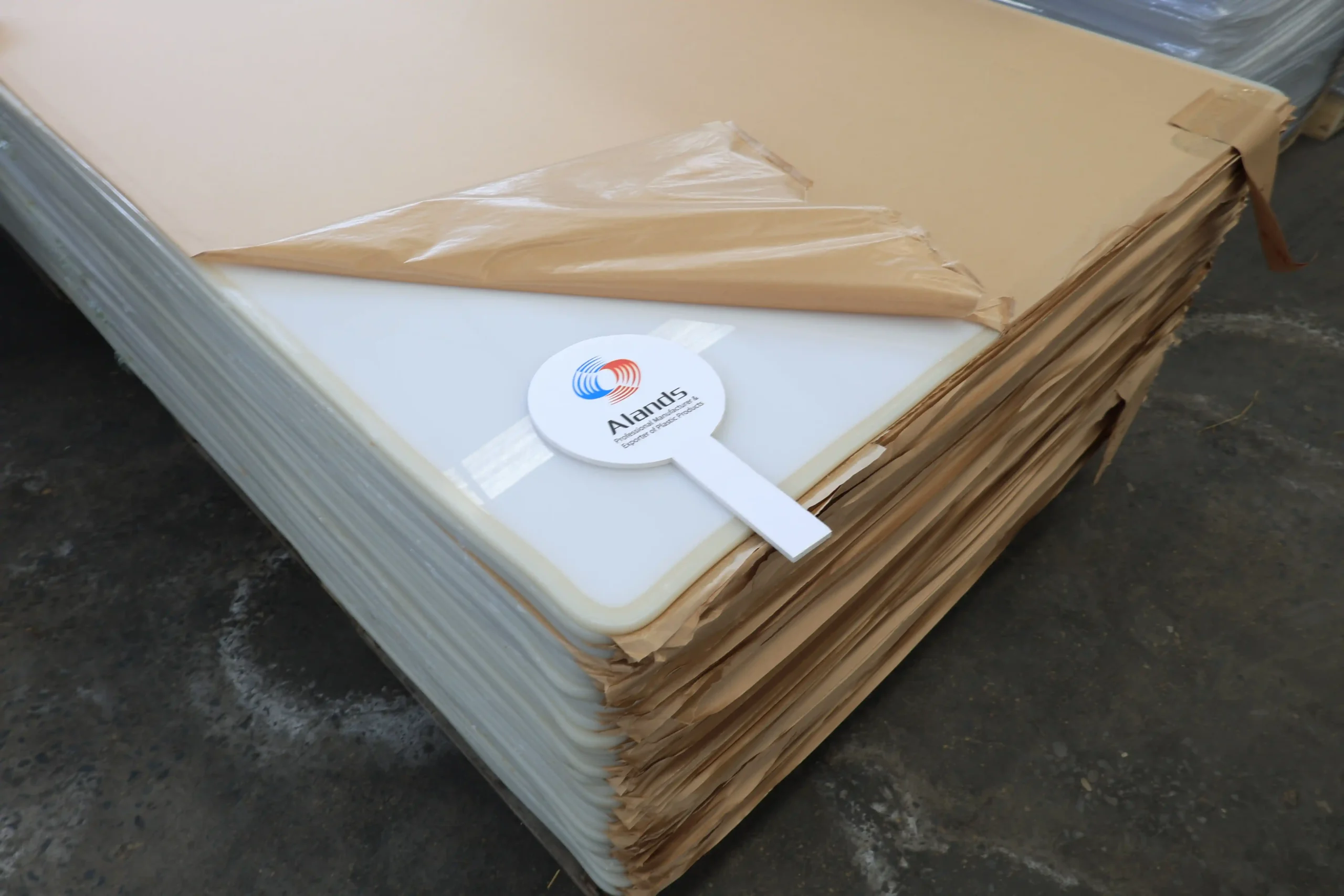
Paper masking is a common option for acrylic sheets supplied in bulk.
It gives the sheets a more standard covered condition and is widely used in factory stock, wholesale supply, and export packing. For many buyers, paper masking also makes the sheets look more stable and better protected during storage and transportation.
In practical use, many customers choose paper masking because it fits regular full-sheet supply and gives the product a traditional board-material appearance.
PE Film
PE film is also widely used on acrylic sheets.
It provides direct surface coverage and is commonly seen on clear sheets, mirror sheets, and many standard acrylic products. Some customers prefer PE film because it gives a cleaner visible presentation of the sheet surface and works well for their own handling habits.
In actual business, PE film is not simply chosen because of peeling convenience.
It is often selected because the customer prefers that type of surface covering for stock management, inspection, or local resale.
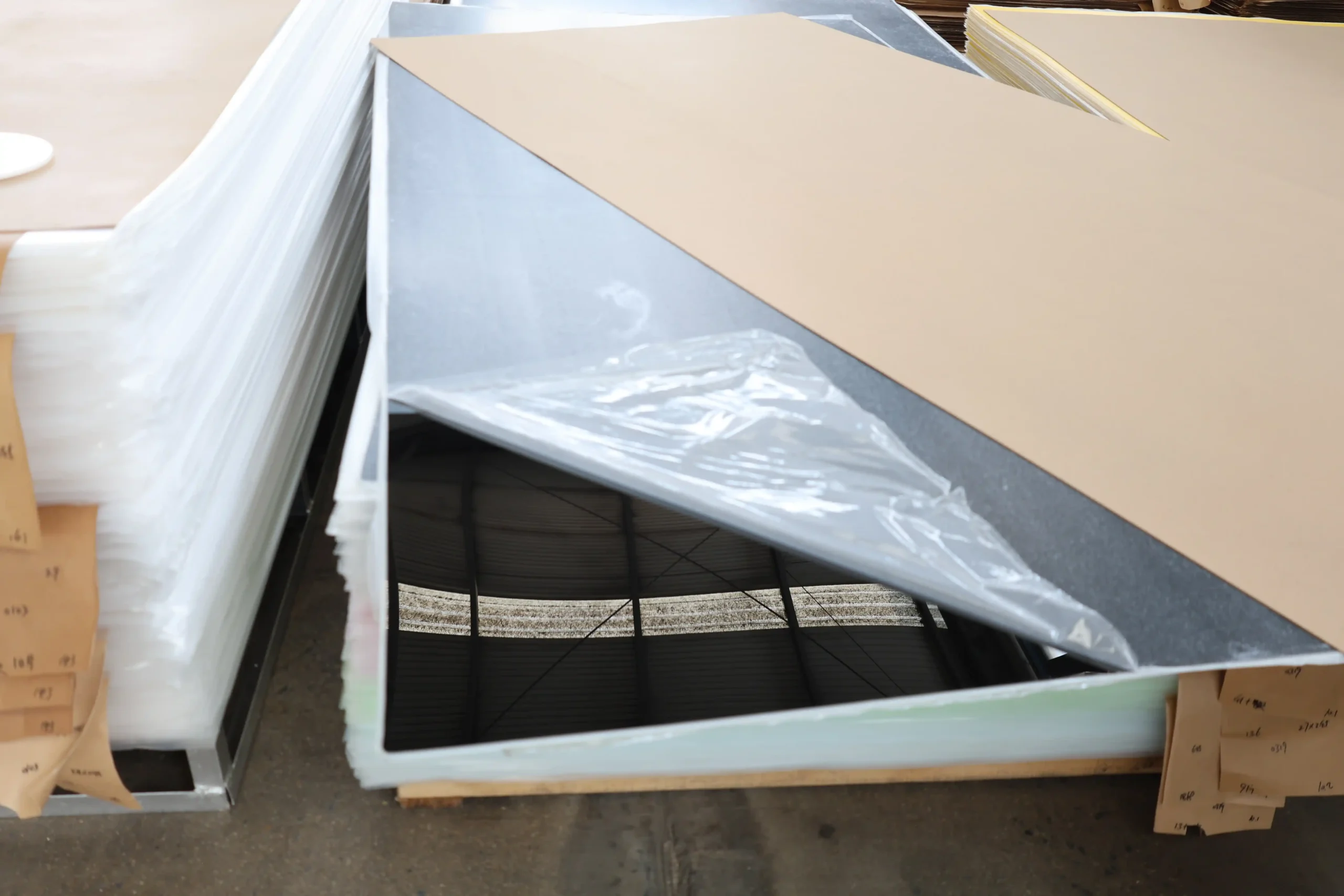
The Real Difference Is Not Just Peeling
For acrylic sheet buyers, the real comparison between paper masking and PE film is not only about whether the masking is easy to remove.
A better way to understand it is this:
- both can protect the surface
- both can be made with good peeling performance
- both are common in bulk acrylic sheet supply
- the final choice usually depends on customer preference, product type, and order requirement
So when customers choose masking, they are usually not asking only, “Which one is easier to peel?”
They are also asking:
- What type looks better for my market?
- What type matches my product line?
- What type do my workers prefer to handle?
- What type works better for my packaging and resale method?
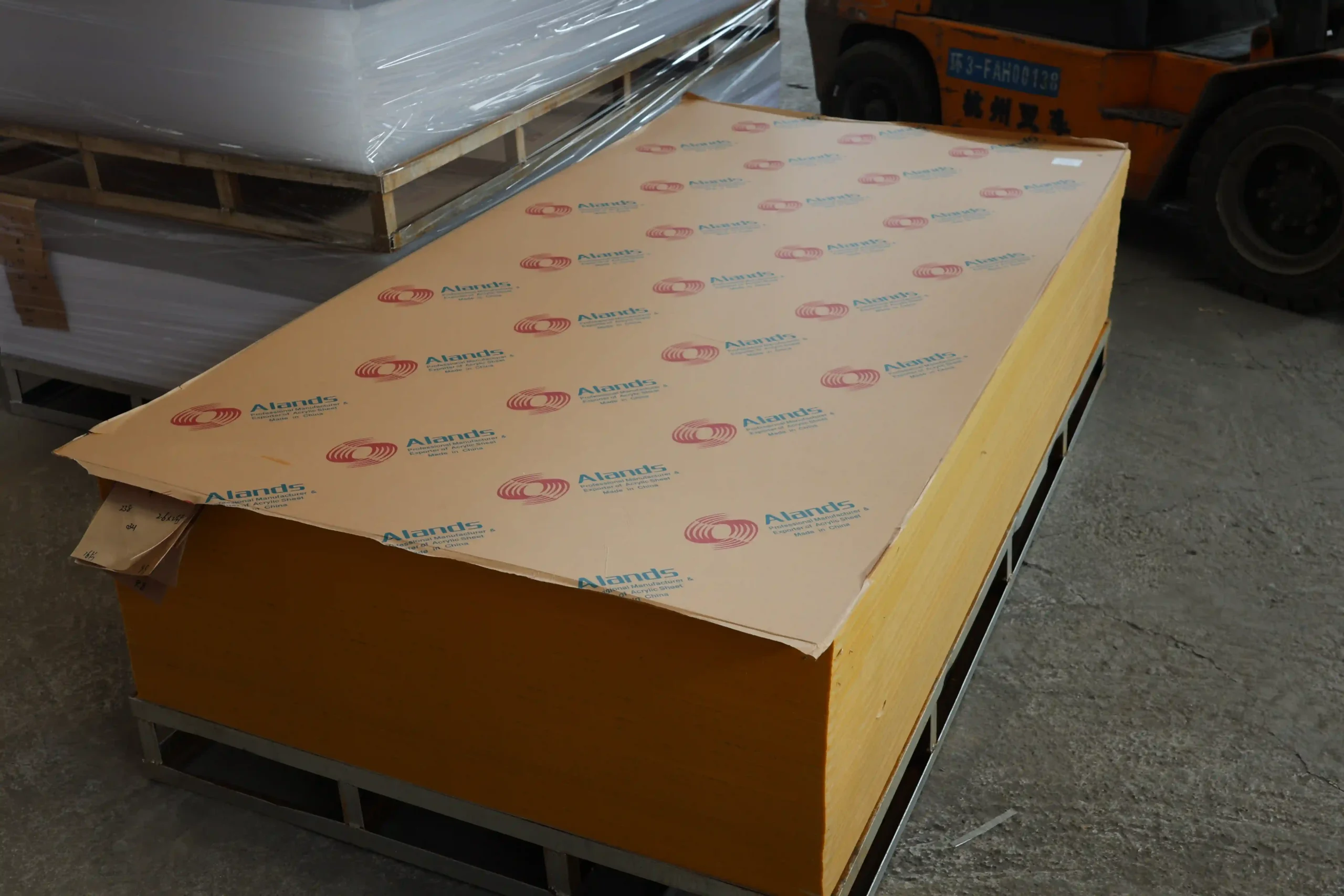
Custom Logo Printing on Masking
For many customers, masking is not only for protection.
It is also part of product branding.
Some buyers ask for their own logo, brand name, or company information to be printed on the paper masking or PE film. This is especially common for importers, distributors, and customers building their own local brand.
Custom printed masking helps them in several ways:
- improves brand visibility
- makes the sheets look more professional
- separates their products from generic market supply
- supports local resale and brand recognition
For these customers, the masking layer is doing two jobs at the same time:
protecting the acrylic sheet and strengthening the brand image.
Protective Masking Is Part of Proper Acrylic Sheet Supply
Acrylic sheet supply is not only about thickness, color, and size.
It is also about whether the sheet arrives in good surface condition.
Protective masking prevents scratches during stacking, loading, transportation, and workshop handling. Paper masking and PE film are both common solutions, and the right choice depends more on order preference and product presentation than on a simple “easy to peel” comparison.
For customers who want stronger branding in the market, custom logo printing on the masking layer is also an important option.
In wholesale acrylic sheet business, this is not a small detail.
It is part of delivering the sheet properly.