



3mm Clear Perspex Sheet: Types, Sizes, Uses and Cutting Guide

A 3mm clear Perspex sheet may look like a simple standard material, but its performance can vary depending on the acrylic type, surface finish, sheet size, supporting structure and processing method.
For a small picture frame, 3mm acrylic can provide a lightweight and clear alternative to glass. For a large unsupported panel, however, the same thickness may flex more than expected.
The choice between clear, frosted, tinted and decorative acrylic also affects light transmission, privacy, appearance and final use.
This guide explains the main types of 3mm acrylic sheets, common sizes, approximate sheet weight, suitable applications and practical cutting methods.
What Is a 3mm Clear Perspex Sheet?
Perspex is a commonly recognized name for acrylic sheet, also known as PMMA.
A 3mm Perspex sheet has a nominal thickness of 3 millimetres. Clear acrylic provides a bright, glass-like appearance while being lighter and easier to process than ordinary glass.
It can be cut, drilled, engraved, printed, polished and heat bent into different shapes.
Typical characteristics of a 3mm clear acrylic sheet include:
| Property | Typical Information |
|---|---|
| Material | PMMA acrylic |
| Nominal thickness | 3mm |
| Surface | Clear and glossy |
| Light transmission | Up to approximately 92% |
| Density | Approximately 1.19g/cm³ |
| Standard size | 1220 × 2440mm |
| Other sizes | 1000 × 2000mm, 2050 × 3050mm and custom sizes |
| Surface protection | PE film or paper masking |
| Processing | Cutting, drilling, engraving, printing and bending |
The exact thickness, dimensions and surface protection should be confirmed before ordering, especially when the sheet must fit into a slot, frame or assembled product.

Types of 3mm Acrylic Sheet Finishes
Acrylic sheets with the same 3mm thickness can have very different visual and functional properties.
Choosing the correct finish is important because clear, frosted, tinted and decorative acrylic are designed for different applications.
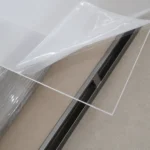
Clear Acrylic Sheet
A clear acrylic sheet provides the highest transparency among the common finishes.
It is generally selected when the project requires:
- Clear product visibility
- A glass-like appearance
- High light transmission
- Transparent protective covers
- Printing or engraving on a clear surface
Typical applications include picture frames, display cases, signs, cabinet inserts, protective covers and retail displays.
Clear acrylic is the most suitable option when visibility is more important than privacy.
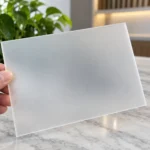
Frosted Acrylic Sheet
A frosted acrylic sheet allows light to pass through while reducing direct visibility.
Its surface diffuses light and creates a softer appearance than standard clear acrylic. It can also make fingerprints and minor surface marks less noticeable.
Frosted 3mm acrylic is commonly used for:
- Privacy screens
- Office partitions
- Decorative panels
- Light diffusers
- Cabinet doors
- Interior signs
Buyers should distinguish between one-side frosted, two-side frosted and internally diffused acrylic, as each type produces a different visual effect.
Tinted Transparent Acrylic Sheet
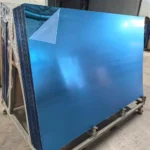
Tinted transparent acrylic belongs to the broader color acrylic sheet range. It remains transparent but has a darker or coloured appearance.
Common options include smoke grey, bronze, blue and other tinted colours. The amount of light passing through the sheet depends on the colour and tint level.
Tinted acrylic is frequently used for:
- Display covers
- Decorative furniture
- Equipment panels
- Interior partitions
- Lighting applications
- Architectural decoration
A darker tint can provide more privacy, but it will also reduce visible light transmission.

Transparent Coloured Acrylic Sheet
Transparent coloured acrylic combines colour with partial visibility through the sheet.
Unlike opaque acrylic, light and objects can still be seen through the material. This makes it suitable for decorative signs, coloured displays and lighting projects.
Common applications include:
- Retail displays
- Decorative signs
- Art installations
- Coloured lighting panels
- Exhibition components
- Custom product displays
Colour appearance may change under different lighting conditions. For large orders, checking a physical colour sample is recommended.
Glitter and Decorative Acrylic Sheet
A colorful glitter cast acrylic sheet contains decorative particles or special visual effects within or on the surface of the sheet.
It is mainly selected when appearance is more important than maximum transparency.
Typical applications include:
- Cosmetic displays
- Event decoration
- Jewellery stands
- Decorative signs
- Craft products
- Interior design panels
Glitter acrylic should not be treated as a direct replacement for standard clear acrylic because its optical clarity and processing behaviour may differ.
Common Sizes of 3mm Acrylic Sheet
The most common full-sheet size is:
1220 × 2440mm, also known as a 4 × 8 clear acrylic sheet.
Other commonly supplied sizes include:
- 1000 × 2000mm
- 1220 × 1830mm
- 1500 × 3000mm
- 2050 × 3050mm
Custom cutting may also be available for customers who require smaller panels or finished components.
The correct sheet size depends on:
- Final product dimensions
- Cutting layout
- Material waste
- Machine working area
- Packaging requirements
- Shipping method
For batch production, selecting the correct parent sheet size can reduce offcuts and lower the material cost of each finished part.
How Much Does a 3mm Acrylic Sheet Weigh?
Acrylic has an approximate density of 1.19g/cm³.
The approximate sheet weight can be calculated using the following formula:
Length × Width × Thickness × Density
The table below shows the approximate weight of several common 3mm acrylic sheet sizes:
| Sheet Size | Approximate Weight |
|---|---|
| 1000 × 2000mm | 7.14kg |
| 1220 × 1830mm | 7.97kg |
| 1220 × 2440mm | 11kg |
| 1500 × 3000mm | 16.07kg |
| 2050 × 3050mm | 22.31kg |
These figures refer to the approximate net weight of the acrylic material.
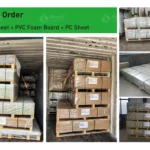
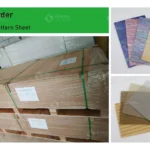
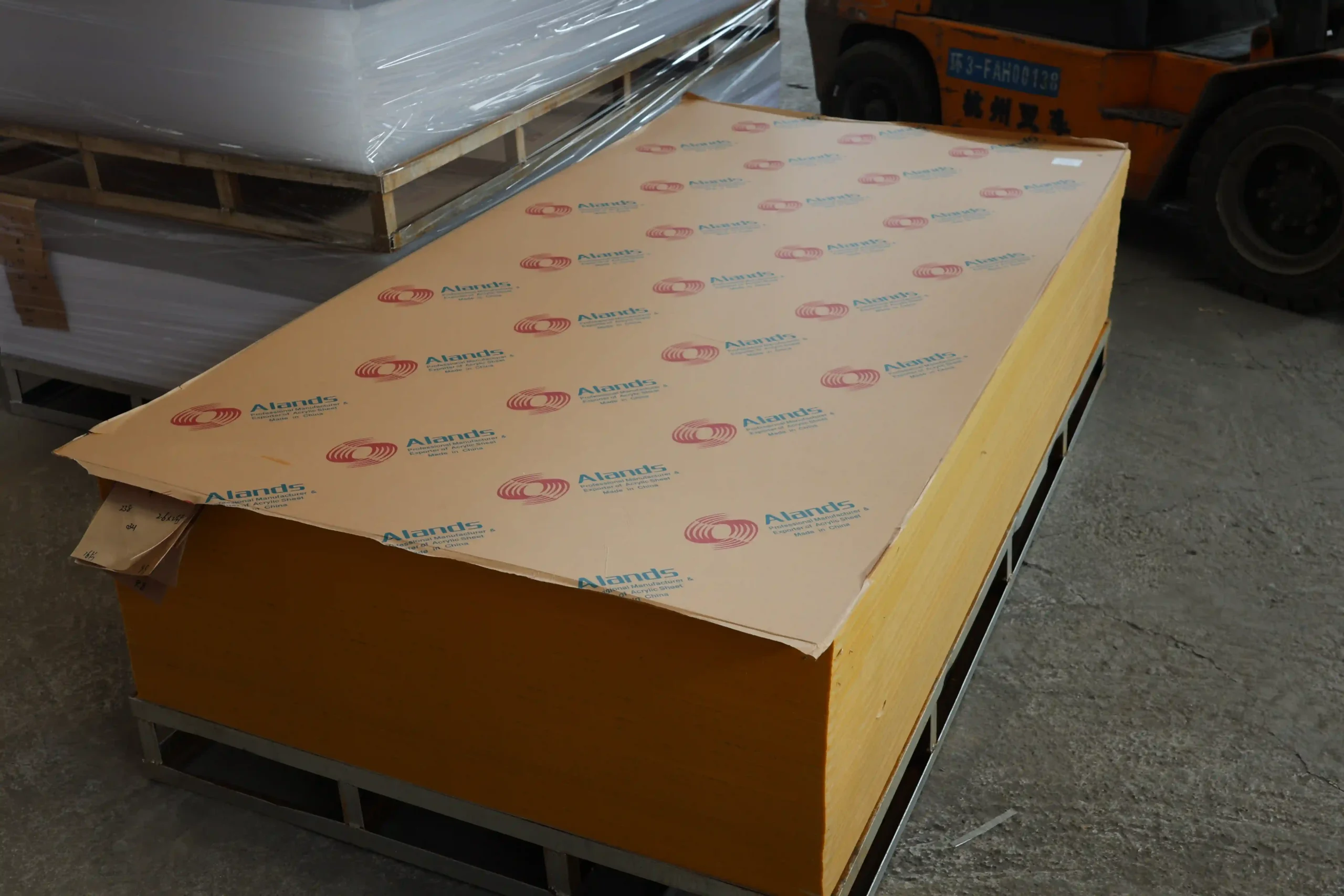
The actual shipping weight will usually be higher because it may include:
- Protective film or paper
- Corner protection
- Kraft paper wrapping
- Wooden pallets
- Wooden cases
- Other export packaging
The actual sheet weight may also vary slightly because the real thickness is not always exactly 3.00mm.
When comparing quotations, buyers should confirm whether the price is calculated per sheet, per kilogram or per tonne.
Is 3mm Acrylic Strong Enough?
A 3mm acrylic sheet is strong enough for many indoor and light-duty applications, but its suitability depends on more than thickness alone.
Panel size and supporting structure are especially important.
A small sheet supported around all four edges can remain stable. A large sheet fixed at only two points may bend, even though both panels are made from the same 3mm material.
Three-millimetre acrylic is commonly suitable for:
- Picture frame covers
- Small indoor signs
- Countertop displays
- Menu holders
- Decorative panels
- Cabinet inserts
- Product covers
- Small partitions
- Model-making projects
A thicker sheet may be more suitable for:
- Large unsupported panels
- Heavy-duty shelves
- Large outdoor signs
- Structural glazing
- Strong wind exposure
- High-impact protection
- Security barriers
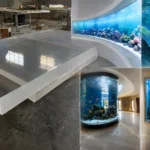
- Large aquariums
Before selecting 3mm acrylic, consider:
- Overall panel width and height
- Distance between supporting points
- Whether all edges are fixed
- Indoor or outdoor use
- Wind or impact exposure
- Required flatness
- Whether the panel will carry weight
When visible bending is unacceptable, additional support or a thicker option such as a 5mm Perspex sheet should be considered.
What Is 3mm Acrylic Sheet Used For?
Three-millimetre acrylic is popular because it is lightweight, easy to process and suitable for a wide range of products.
Picture Frames and Poster Covers
A 3mm clear acrylic sheet can replace glass in picture frames, poster frames and certificate holders.
It is lighter than glass and less likely to break during transportation or installation.
For large frames, the acrylic should be properly supported to reduce bending.
Signs and Printed Panels
Three-millimetre acrylic is commonly used for indoor signs, logo panels, menu boards and directional signs.
It can be:
- UV printed
- Screen printed
- Laser engraved
- Laminated with vinyl
- Cut into letters
- Mounted with spacers
Clear acrylic can also be reverse printed. The graphic is printed behind the front surface, helping protect it from scratches and regular handling.
Retail Displays
Three-millimetre acrylic is frequently used for lightweight display products such as:
- Price tag holders
- Brochure stands
- Product dividers
- Countertop signs
- Cosmetic displays
- Small product holders
The sheet can be heat bent into L-shaped, U-shaped or angled components.
Protective Covers
Clear acrylic can be fabricated into dust covers and protective panels for:
- Collectibles
- Models
- Electronic equipment
- Retail products
- Small instruments
- Displayed objects
For applications exposed to strong impact, polycarbonate may be more suitable than standard acrylic.
Cabinet and Furniture Panels
Three-millimetre acrylic can be used for cabinet door inserts, decorative furniture panels and lightweight partitions.
Installation holes should allow sufficient clearance for thermal expansion. Screws should not be overtightened because concentrated pressure may cause cracking.
Crafts and Model Making
The sheet is also used for templates, custom boxes, decorative shapes, models and creative projects.
For one-off projects, manual cutting may be sufficient. For repeated production, laser cutting or CNC routing usually provides better consistency.
How to Cut a 3mm Acrylic Sheet
The best cutting method depends on the required shape, edge quality, production quantity and available equipment.
A method that works well for one straight cut may not be suitable for hundreds of detailed parts.
Method 1: Score and Snap
Score and snap is mainly suitable for straight cuts on small or medium-sized sheets.
Basic process:
- Keep the protective masking on the sheet.
- Mark the cutting line accurately.
- Place a straight guide along the line.
- Score the same line repeatedly with an acrylic scoring knife.
- Position the scored line over a straight table edge.
- Apply even downward pressure to snap the sheet.
This method is useful when:
- Only straight cuts are required
- The quantity is small
- A power tool is not available
- The edge will be hidden or finished later
Common problems include:
- The cut moving away from the marked line
- An uneven broken edge
- Cracking near the end of the cut
- Surface scratches caused by a moving guide
The straight guide must remain firmly fixed during scoring. The sheet should also be supported evenly before snapping.
Method 2: Laser Cutting
Laser cutting is one of the most common methods for processing 3mm acrylic.
It is suitable for:
- Custom shapes
- Letters and logos
- Display components
- Decorative patterns
- Small holes
- Repeated production
A correctly adjusted laser can produce a smooth and clear cut edge.
Cast acrylic is generally preferred when a white or frosted engraved result is required. Extruded acrylic may produce a different engraving appearance, although both types can be laser cut.
The final result depends on:
- Laser power
- Cutting speed
- Focus position
- Air assistance
- Protective masking
- Acrylic type
- Machine condition
Excessive heat can cause melting, edge distortion or small bubbles. Insufficient power or excessive cutting speed may leave part of the cut incomplete.
For large orders, a cutting test should be completed using material from the actual production batch.
Method 3: Saw Cutting
A table saw, panel saw or circular saw can be used to cut straight lines in 3mm acrylic.
The blade should be suitable for plastic sheet and have enough teeth to produce a clean cut.
Important points include:
- Support the sheet on both sides
- Prevent vibration during cutting
- Use a steady feed speed
- Avoid forcing the sheet into the blade
- Keep the protective masking in place
- Remove chips from the cutting area
Moving too slowly can generate excessive heat and melt the edge. Moving too quickly can increase chipping.
Because 3mm acrylic is relatively thin, stable support is especially important.
Method 4: CNC Routing
CNC routing is suitable for repeated parts, complex shapes, slots, installation holes and larger production quantities.
An O-flute router bit is often used for acrylic because it can remove chips efficiently and reduce heat buildup.
Good CNC results depend on:
- Correct router bit
- Suitable spindle speed
- Stable feed rate
- Effective chip removal
- Secure sheet holding
- Correct cutting depth
When chips are not removed properly, they may be cut again and generate additional heat. This can produce a rough or melted edge.
Vacuum holding, clamps or suitable fixtures should be used to prevent a thin 3mm sheet from moving during machining.
How to Drill 3mm Acrylic Without Cracking
Acrylic may crack if the drill bit catches the material or excessive pressure is applied.
To reduce the risk:
- Keep the protective film on the sheet
- Support the back of the drilling area
- Use a drill bit suitable for acrylic or plastic
- Start at a controlled speed
- Do not force the drill through the sheet
- Keep holes away from the sheet edge
- Allow clearance around screws
- Avoid overtightening fasteners
For batch production, CNC drilling or laser-cut holes may provide more consistent positioning.
However, very small laser-cut holes can be affected by heat, so the required diameter and tolerance should be tested before production.
Common Acrylic Cutting Problems and Their Causes
Melted Edges
Possible causes include:
- Cutting speed is too slow
- Tool speed is too high
- Chips are not removed
- Laser power is excessive
- The blade or router bit is unsuitable
Chipped Edges
Possible causes include:
- Cutting speed is too fast
- The sheet is vibrating
- The saw blade is too coarse
- The material is not properly supported
- The cutting tool is blunt
Cracks Around Holes
Possible causes include:
- The drill bit catches the sheet
- The hole is too close to the edge
- Too much pressure is applied
- Screws are overtightened
- No allowance is made for expansion
Uneven Laser-Cut Edges
Possible causes include:
- Incorrect focus
- Dirty optical components
- Inconsistent sheet thickness
- Incorrect power and speed settings
- Poor sheet flatness
Testing a small section before full production can reduce material waste and processing problems.
Cast vs Extruded 3mm Acrylic Sheet
Both cast and extruded acrylic are available in 3mm thickness, but they are not identical.
| Feature | Cast Acrylic | Extruded Acrylic |
|---|---|---|
| Thickness variation | Usually greater | Usually more consistent |
| Laser engraving | Produces a frosted appearance | Often produces a clearer appearance |
| Thermoforming | Suitable | Commonly selected |
| Surface quality | Good optical appearance | Consistent for volume production |
| Cost | Often higher | Often more economical |
| Typical use | Displays, engraving and fabrication | Standard production and forming |
Cast acrylic may be preferred for premium displays, engraving and customized fabrication.
Extruded acrylic may be preferred when consistent thickness, repetitive production and cost control are important.
The correct option depends on how the sheet will be processed.
Can 3mm Acrylic Be Used Outdoors?
Acrylic has good resistance to outdoor weathering, but a 3mm sheet is relatively flexible.
It can be used for small outdoor signs and protected decorative panels when properly supported.
Before using 3mm acrylic outdoors, consider:
- Panel size
- Wind exposure
- Supporting frame
- Fastener spacing
- Expansion allowance
- Installation direction
- Local temperature changes
A large unsupported 3mm sheet may move or bend in strong wind. A thicker sheet or additional support may be required for exposed installations.
What Should Buyers Check Before Ordering?
A quotation that only says “3mm clear acrylic sheet” does not provide enough information for an accurate comparison.
Buyers should confirm the following details.
Acrylic Type
Is the material cast or extruded?
Actual Thickness Range
Is 3mm the nominal thickness, and what thickness tolerance applies?
Raw Material
Is the sheet made from virgin PMMA, recycled material or a mixed formulation?
Sheet Size
Are the quoted dimensions untrimmed production sizes or finished trimmed sizes?
Protective Masking
Does the sheet use PE film, paper masking or another protective material?
Sheet Weight
What is the approximate net weight of each sheet?
Surface Quality
What standards apply to scratches, black spots, bubbles, waves and other visible defects?
Processing Requirements
Will the sheet be laser cut, printed, bent, drilled or polished?
Packaging
How many sheets are packed on each pallet, and what export protection is included?
Cutting Tolerance
When custom sizes are required, what dimensional tolerance can the supplier achieve?
Providing the final application helps the supplier recommend suitable material instead of simply quoting the lowest-cost option.
Frequently Asked Questions
Is 3mm acrylic suitable for picture frames?
Yes. It is commonly used as a lightweight replacement for glass in picture frames and poster covers. Large frames may require additional support.
Is 3mm acrylic too thin for a sign?
It depends on the sign size and installation method. It is suitable for many small indoor signs, but a large unsupported or outdoor sign may require a thicker sheet.
Can 3mm acrylic be cut with a knife?
It can be scored with a proper acrylic scoring knife and snapped along a straight line. An ordinary utility knife may not produce the same controlled groove.
Can 3mm acrylic be laser cut?
Yes. Three-millimetre acrylic is widely processed with CO₂ laser-cutting equipment. The correct power, speed and focus should be tested before production.
Can 3mm acrylic be bent?
Yes. It can be heat bent into display stands, holders and covers. The heating area and temperature must be controlled to avoid bubbles or distortion.
How heavy is a 4 × 8 foot sheet of 3mm acrylic?
A 1220 × 2440mm sheet weighs approximately 11kg before packaging. Actual weight may vary slightly because of thickness tolerance and surface masking.
Is 3mm acrylic suitable for outdoor use?
It can be used for small, properly supported outdoor panels. Large or highly exposed installations may require thicker acrylic or a stronger supporting structure.
Choosing the Right 3mm Acrylic Sheet
A 3mm clear Perspex sheet is a versatile option for signs, picture frames, retail displays, cabinet inserts, protective covers and many other lightweight applications.
However, selecting the correct sheet requires more than checking the stated thickness.
The acrylic type, actual thickness range, sheet dimensions, surface finish, supporting structure and processing method all affect the final result.
For detailed product specifications and bulk-order information, visit the 3mm Perspex sheet product page.
When requesting a quotation, provide the required sheet size, quantity, application, processing method and destination. This information allows the supplier to recommend a more suitable 3mm acrylic sheet and prepare a more accurate quotation.